Screen printing, DTG and sublimation by fabric type
The fabric underneath decides the technique before the artwork does. Mesh count, white underbase and substrate reserve explain why one same file changes route with the fiber, and the Atelier's record bank shows where each capability sits installed.
The fiber of the garment decides the route. Sublimation sets color inside polyester, and on cotton it comes out dull. Cotton belongs to screen printing, which lays ink on top of the weave, and to direct to garment printing, which pushes water based ink down into the fiber. That height, ink above or ink inside, governs mesh count, white underbase and the weight of the lettering.
The fiber decides before the artwork
A file looks identical on screen whatever garment it is headed for. The fabric underneath changes everything else.
Sublimation sets color on polyester. Heat turns the ink into gas, the gas enters the synthetic fiber and the fiber locks it in as it cools. Cotton lets that gas pass through and keeps a dull tone from the moment it leaves the press. The backdrop record says it in workshop words, sublimation only takes on polyester and fabric with cotton in it comes out washed. That is where the question about sublimation fading comes from, and the answer is that it never took hold on the cotton at all.
Two other techniques work on cotton. Screen printing lays a layer of ink on top of the weave and direct to garment printing pushes water based ink down into the fiber. That height, ink above or ink inside, explains what follows.
Screen printing, where the mesh is the decision
Mesh is counted in threads per inch and it sets how much ink passes. The heather tee record calls, at the screen burning step, for a mesh of 43 to 55 threads, open, able to release enough body to cover the heather. The canvas tote record moves up to a fine mesh of 110 to 140 threads when the artwork carries a thin serif, with less ink per pass and the fineness to hold the terminal of the letter.
A mesh serves opacity or it serves detail. Artwork with solid coverage and terminals a hair thick gets split across two meshes, and the emblem tee record carries this in its route, color separation at two inks and two screens burned.
Heather adds physics of its own. Heather yarn is dyed thread spun together with raw thread, and that color climbs up inside light ink until it dirties it. Cream stops being cream. The answer sits in the printing step of that record, a blocker base, a flash between passes and a second color pass to cover the heather. The piece is ordered at one ink and it prints in three movements.
Every additional ink is one more mesh, one more burn and one more registration on the carousel. When registration between two inks drifts, a white edge of fabric shows between them, and that is how it stands written in its field for where the piece breaks.
Thickness moves the same criterion. On cotton canvas of 10 to 12 ounces, the weight the tote record calls for, the fiber absorbs and fattens a fine serif until its terminals close up. A letter of solid area on that canvas cracks at the fold.
Direct to garment, where the knit dictates the letter
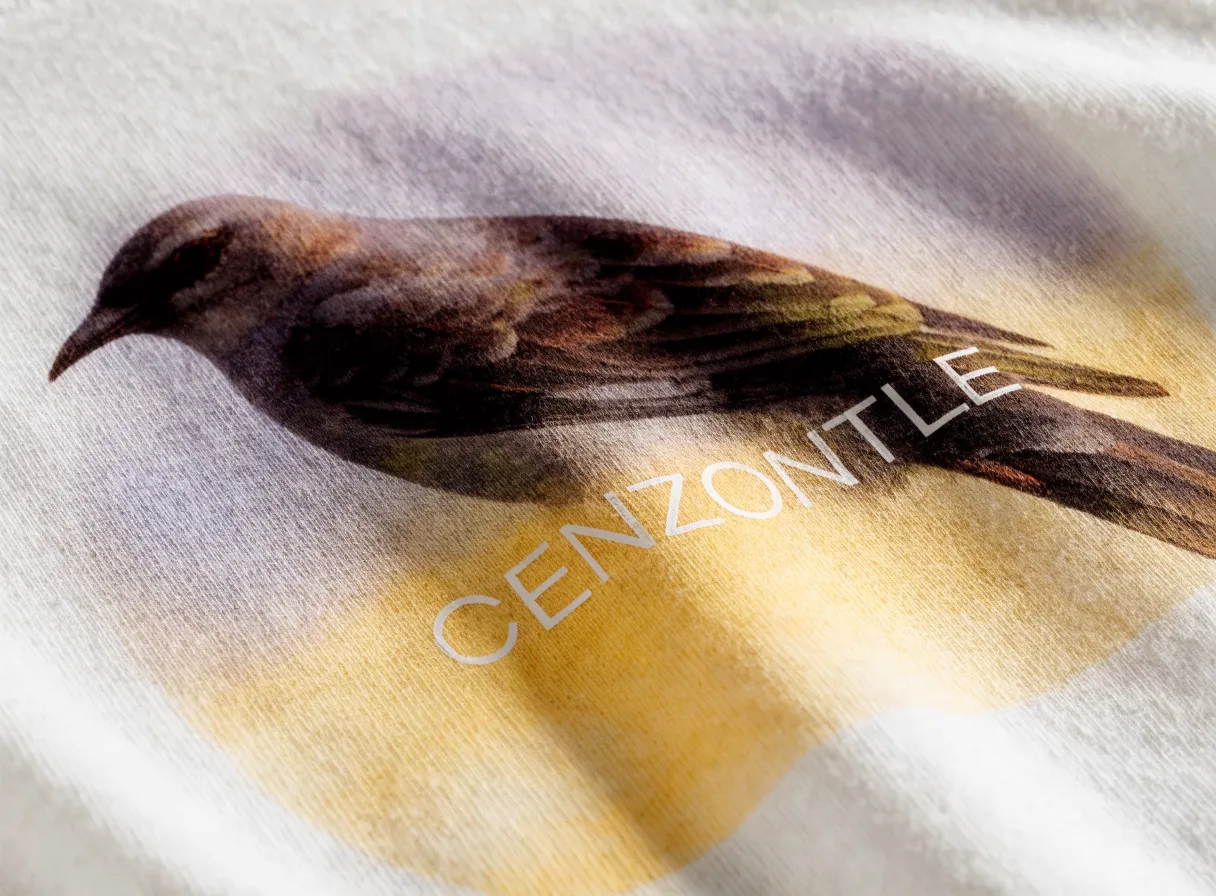
In the mockingbird macro the ink carries no edge of its own. The gradient dissolves inside the cotton, the yellow halo ends without a rim and the dot of the fabric runs through every white letter.
That is what a thin letter loses on knit fabric. The stroke falls into the valley between the columns of the knit, the ink sinks and the letter comes out bitten. The craft rule is to raise the weight of the stroke and open the space between letters. A typeface that reads flawless on a card asks for more body to live on jersey.
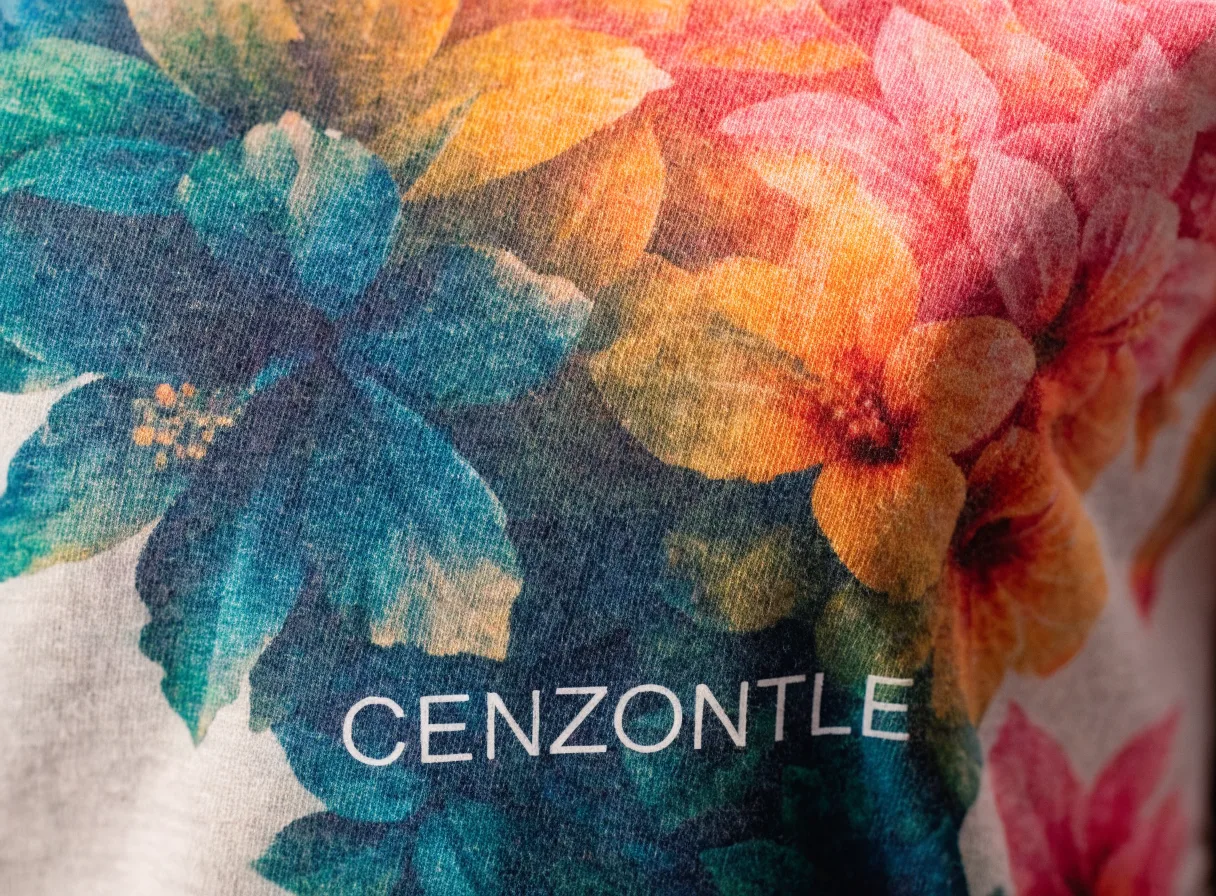
Full color coverage, like the floral shoulder, rests on two cares. The first is the white underbase. On colored fabric the machine prints a white cushion and the color on top of it, and the record for that photo warns that a thin underbase brings the colors out washed. The second is pretreatment, the liquid that holds water based ink at the surface of the fiber. Applied heavy or cured short, it leaves a box, a square faintly darker around the artwork that shows up at the first wash, already in the hands of the person wearing the garment.
That box carries measurable weight inside the bank. Of the six records whose technique names direct to garment printing, four write pretreatment or its box into the field for where the piece breaks. It is the note that shows up latest in the route, once the garment has already passed through everything else.
Printing a chest panel is solved in many workshops. Bleeding the artwork to the edge, crossing the shoulder and continuing onto the sleeve in registration asks for another class of equipment, and the floral shoulder record marks it that way under its critical capability.
Sublimation, where white is the substrate
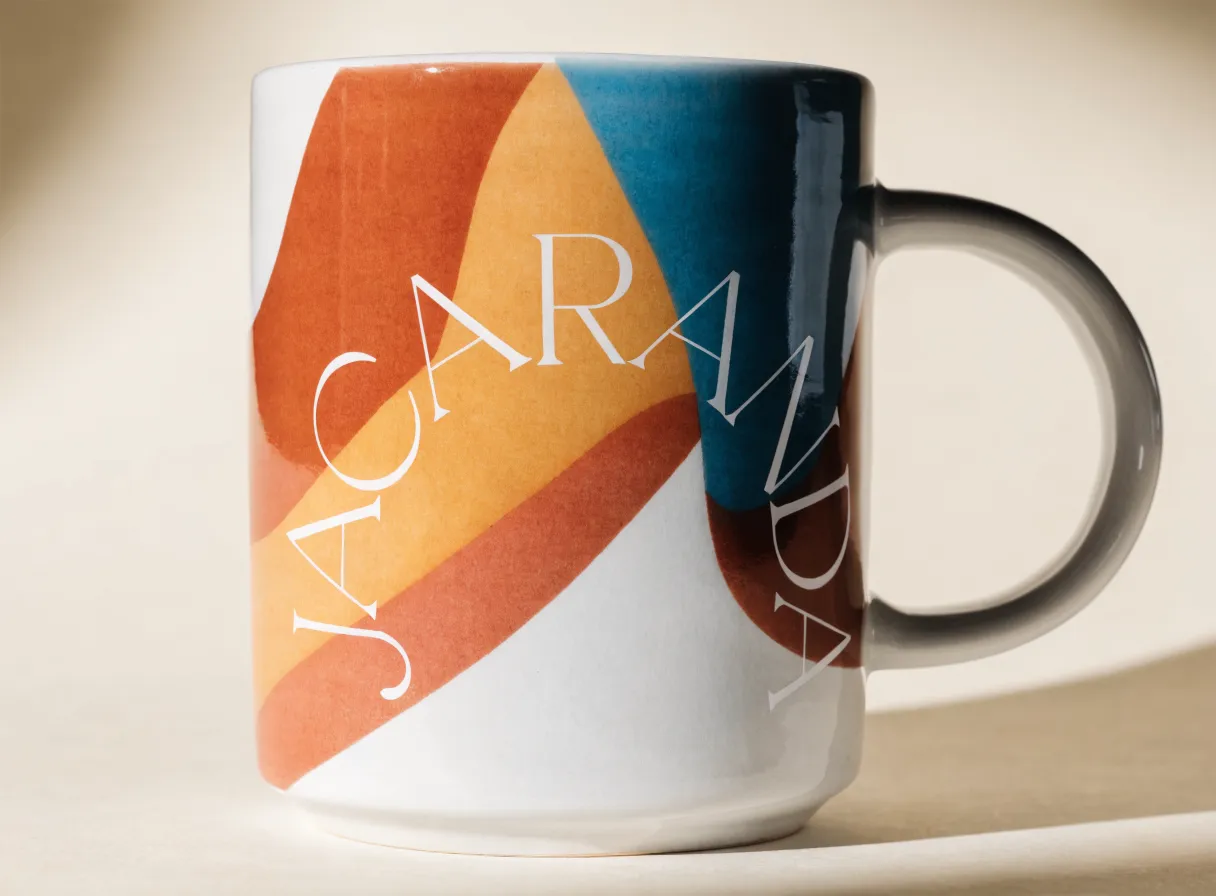
On the mug, the word runs white across blocks of terracotta, amber and petrol blue. That white is bare ceramic. Sublimation works without white ink, so everything that has to read white is left in reserve and the substrate supplies it. This is why the technique calls for light bases, and a design built on a dark ground changes at the root along this route. The coating covers the wall and the handle stays out of reach, so the artwork is set against the position of the handle before it prints in mirror.
On polyester sublimation leaves the color inside the fiber, with no layer on top and no hand to the touch. Durability there depends on the fiber itself, because the piece ends up with no layer that can crack or lift.
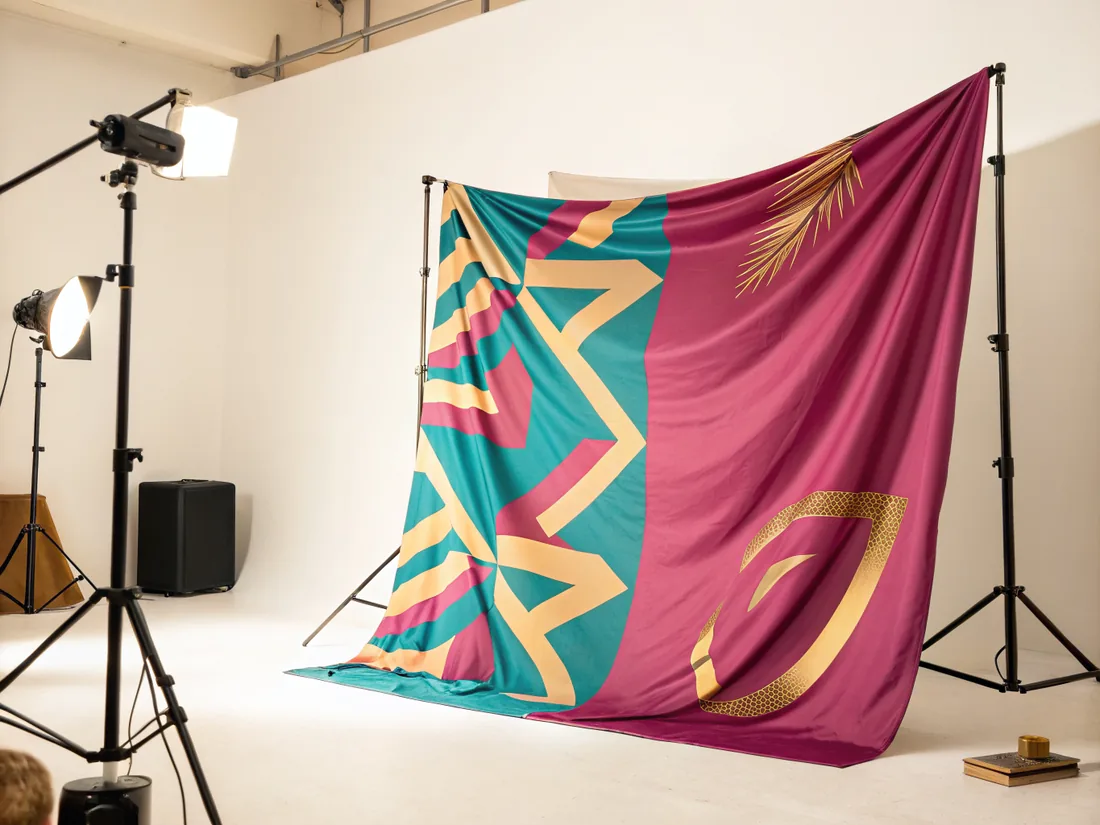
The limit is measured in machine width. The studio backdrop runs floor to ceiling in a single panel because it came off a calender of 3.20 meters of continuous width, and its record marks that width as the capability that decides whether the piece comes out whole or patched. With less width, the same piece comes out as joined panels and the seam sits visible under raking light. Across flat areas the color stays even once the profile is calibrated against the real fabric.
Where each capability sits installed
The Atelier's record bank holds 1,291 entries across 1,184 distinct images. Counting each image once, 82 records pass through flat screen printing inside their production route and 53 through rotary and textile screen printing. Sublimation appears in 29 of those routes and direct to garment printing in 8. Artwork conceived for direct to garment travels a narrow lane, and that gets planned from the file onward.
The criterion in three questions
The first is what fiber the garment has. Light polyester opens the door to sublimation. Cotton leaves the ground to screen printing and to direct to garment printing.
The second is how the artwork is built. Flat, countable colors, with strokes a mesh can hold, go to screen printing. Photography and continuous gradients go to direct to garment printing.
The third is where the artwork lands. A flat chest panel is solved by any of the three routes. Crossing shoulder, seam and sleeve in registration shortens the list of workshops able to do it.
The route for the heather tee names three separate workshops before the piece arrives folded in its bag. The backdrop route names four. Arriving with the fiber already decided saves the whole trip.
Questions that come up often
Why does sublimation fade on my cotton tees?
Sublimation takes only on polyester. Heat turns the ink into gas, the gas enters the synthetic fiber and the fiber locks it in as it cools. Cotton lets that gas pass through, so the garment comes off the press with a dull tone and the color never fixed at all. On cotton the route is screen printing or direct to garment printing.
A darker square appeared around the print after the first wash. What happened?
That box comes from pretreatment, the liquid that holds water based ink at the surface of the fiber during direct to garment printing. Applied heavy or cured short, it leaves a square faintly darker around the artwork, and it shows up at the first wash. Of the seven records in the bank whose technique names direct to garment printing, five write pretreatment or its box into the field for where the piece breaks.
Why does my light color come out dirty on a heather tee?
Heather yarn is dyed thread spun together with raw thread, and that color climbs up inside light ink until it dirties it. Cream stops being cream. The printing step solves it with a blocker base, a flash between passes and a second color pass to cover the heather. The piece is ordered at one ink and it prints in three movements.
What is mesh in screen printing and why does it change with my design?
Mesh is counted in threads per inch and it sets how much ink passes. An open mesh, 43 to 55 threads, releases enough body to cover the heather. A fine mesh, 110 to 140 threads, leaves less ink per pass and holds the terminal of a thin serif. Artwork with solid coverage and terminals a hair thick gets split across two meshes.
Can white be printed with sublimation?
Sublimation works without white ink. Everything that has to read white is left in reserve and the bare substrate supplies it, so the technique calls for light bases and a design built on a dark ground changes at the root along this route. On the mug in the example, the white letters on the diagonal are bare ceramic coating between the blocks of color.
Follow the thread
Three doors to carry the journey forward.

Have you imagined yours yet?
Tell us what you imagine and who it is for. We listen first, and from there we create it with you until you hold it in your hands.