Why embroidery puckers
Puckering is the failure our embroidery records name most often, and it is settled before the machine starts. What to read in the stitch file, in the stabilizer and in the physical sample so the garment falls flat.
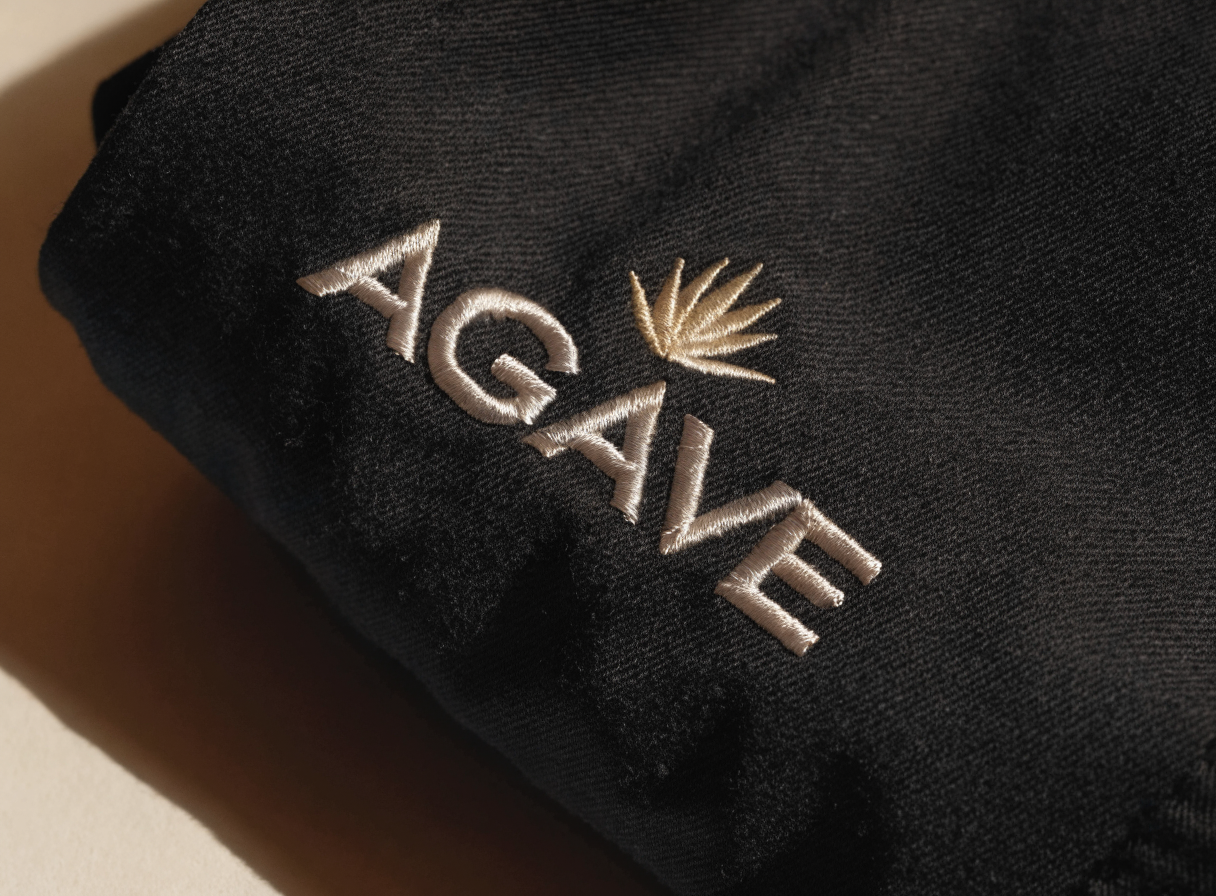
Embroidery puckers because every stitch shortens the fabric a little, and the effect stacks up until the front ripples. The ripple is permanent and the iron arrives late. Puckering is settled before the machine starts, in the stitch file that fixes density and pull compensation, in the stabilizer chosen for that weave, and in the physical sample stitched in production fabric and production thread.
Puckering has a visible signature
A puckered garment reads from a distance. The fabric around the embroidery gives up its flatness and soft ripples travel outward from the motif, as if someone had pulled the weave from the center. That is exactly what happened. Every stitch enters, crosses underneath and comes back out, and as it locks it shortens the fabric it wraps by a little. Multiply that little by every stitch and the front of a chef coat draws in.
It helps to accept from the start that the iron arrives late. With the weave already displaced and the thread holding it in its new position, the ripple is permanent. Puckering is a matter of decisions made earlier.
What the piece bank says
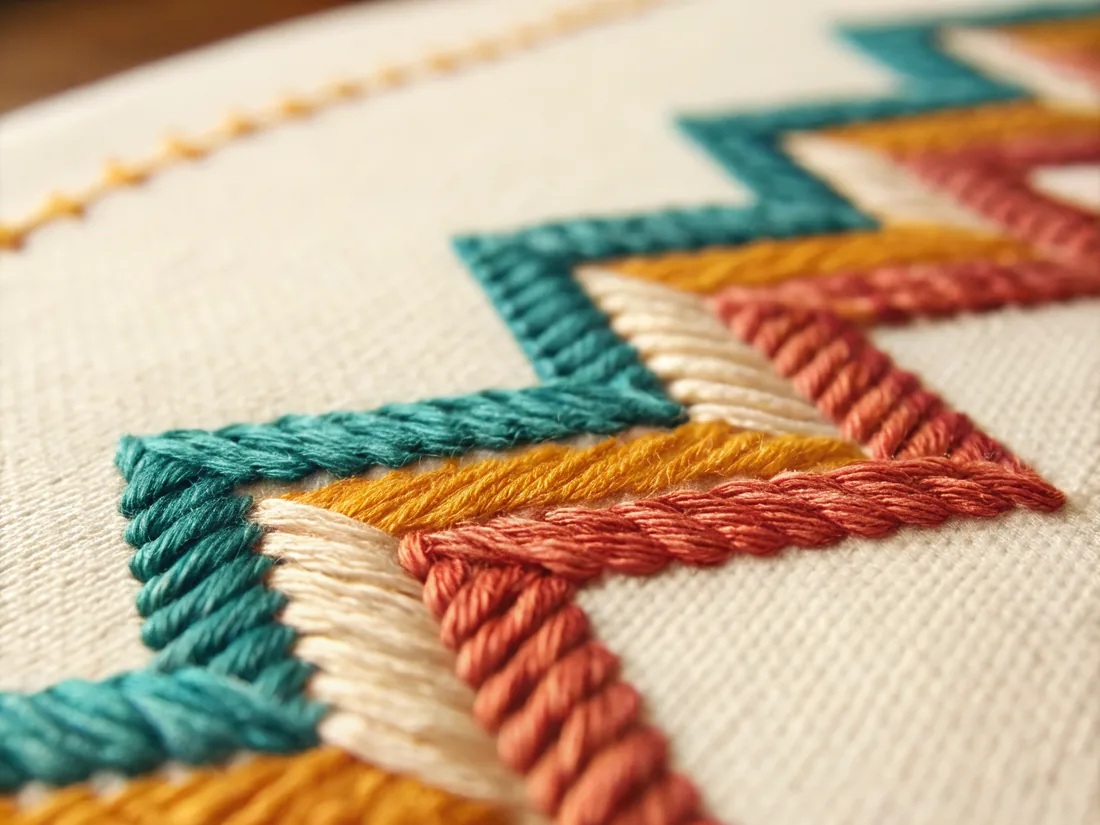
We hold 1,291 documented piece records. In 67 of them, the field that records where a piece breaks names puckering.
Looking at embroidery alone calls for a definition, and I am writing it down because everything that follows hangs on it. A record counts as embroidery when its technique field contains the root bordad, the stem of the Spanish word for embroidery. That gives 144 records, and in 58 of them the failure field names puckering.
It is worth seeing what it competes against. Inside that same field and those same 144 records, stabilizer appears in 25, density in 22, and registration or misalignment in 9. Puckering leads the count with more than double the mentions of the word behind it, and it is entirely preventable.
Digitizing is where the piece is won
The file the machine reads is the stitch file, and building it is called digitizing or punching. It is programming work. Someone takes the vector art and translates it into stitch instructions, and that is where stitch type, density, direction, color sequence and pull compensation get defined.
That last term is worth learning. A good digitizer draws the stitch column a little wider than the original stroke, because the fabric contracts as it is embroidered and the column ends up narrower. The pull is compensated before it happens. Density works the same way. Lowering it puts less thread into the same area and gives the fabric its movement back, with the limit set by the ground beginning to show between one stitch and the next. Direction carries weight too, because a stitch running parallel to the grain pulls differently from one on the diagonal.
Of the 144 embroidery records, 24 name digitizing or punching in the critical capability field, where we note the bottleneck of the piece. Industrial embroidery machines run all across the country. The scarce resource is the judgment of the digitizer, and that judgment is what makes a chef coat fall flat across the chest.
The stabilizer holds the other half
The stabilizer takes the pull and leaves the garment free. The choice changes completely with the weave.
On a black twill chef coat the backing is cut-away, it stays inside the garment and gives the stitch something stable to hold on to. Twill gives under the needle, and a backing that is too light leaves the embroidery drawn in even when the stitch file is correct.
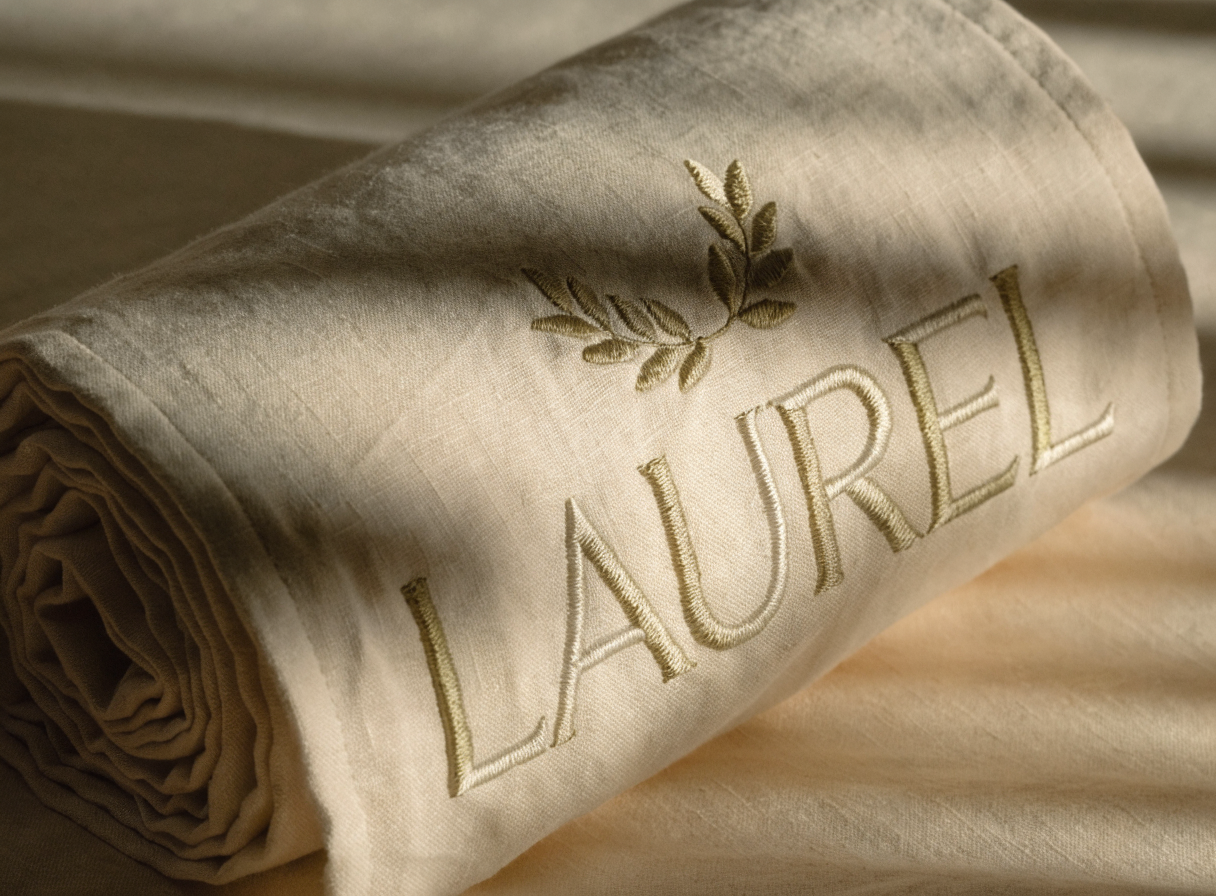
On open-weave linen the answer is double. Soluble stabilizer goes underneath and topping goes on top, a film that keeps the stitch riding above the spaced threads of the linen. With that layer the thin strokes of a serif letter hold their width and the finishing stroke of an R survives.
In 45 of the 144 embroidery records the word for stabilizer is written inside the text of a routing step or of the field that describes where the piece breaks. When a workshop writes it down, it is because they have already fought that fight.
Fabric that stretches asks for a sequencing decision
Knits, fleece and anything carrying elastane behave in their own way. The garment stretches and the stitch stays still. Hooping puts the fabric under tension, the machine embroiders on that tension, and when the hoop comes off the garment returns to its own measure while the embroidery keeps its own. The ripple settles around the motif.
The craft answer is to embroider on the flat panel before the garment is assembled. The cut piece is embroidered first and the garment is sewn afterward around the finished embroidery. That adds a workshop to the route. Of the 144 embroidery records, 137 pass through two or more workshops. The record for the linen table runner logs six steps spread across four different kinds of workshop. Embroidery is a route with several stops.
Small lettering is a physical threshold
Two measurements are worth memorizing, and both of them are written into records in the bank.
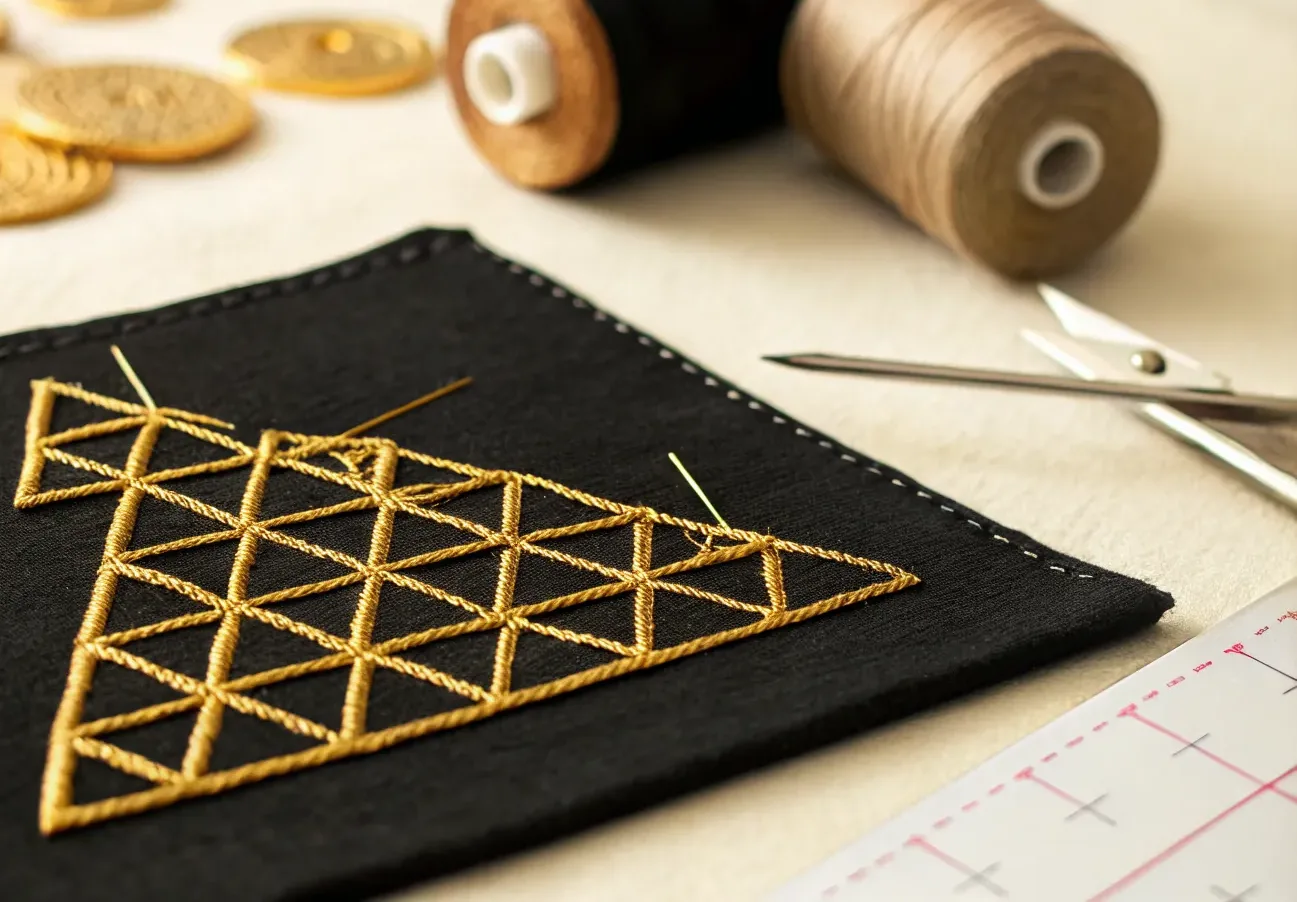
The record for embroidered caps notes in its failure field that thin letters under five millimeters of stroke hold no relief, they flatten and they read dirty. The record for the surgical scrubs notes in its critical capability that the scarce thing is digitizers able to pull legible six millimeter lettering while the garment keeps its shape. Below that height the counters, which are the enclosed spaces inside a letter, close up and an a and an e become identical smudges.
Both measurements come out of the physics of the piece, out of the real width of the stitch column plus the displacement of the pull. If your logo carries a tiny tagline line, that line is the first candidate to pucker the front and to go illegible at the same time, because reading it calls for density and density is exactly what pulls.
The physical sample is the proof that counts
A simulation on screen confirms colors. The behavior of the fabric is confirmed with a stitched sample, and that behavior is what is at stake. The request fits in one sentence. I want a sample stitched in the same fabric and the same thread as the order, before the full run.
Those two conditions are written exactly that way in the route of our grecas piece. Same fabric, because the same stitch file that comes out perfect on denim ripples on corduroy. Same thread, because weight and twist change how much thread fits in the area. Even so, only 11 of the 144 embroidery routes carry the sample written in as a step of its own. Asking for it in writing makes it mandatory.
What to ask for before the machine starts
Four requests cover almost all of the risk. Ask to see the stitch file with density and pull compensation already set for your fabric, with the name of the fabric written into the file. Ask which stabilizer they plan to use and why that one. Ask for the physical sample in production fabric and production thread. And ask whether the embroidery goes on the flat panel or on the assembled garment, because that answer tells you whether the workshop read the weave.
All four are simple and a workshop with craft answers them without breaking stride. That is the point. The conversation up front decides how the garment falls, long before the first stitch.
Questions that come up often
Why does the fabric pucker around an embroidery?
Every stitch enters, crosses underneath and comes back out, and as it locks it shortens the fabric it wraps by a little. That shortening adds up stitch after stitch until the front of the garment draws in and soft ripples travel outward from the motif. With the weave already displaced and the thread holding it in its new position, the ripple stays permanent.
Can a puckered embroidery be ironed flat?
The iron arrives late. With the weave already displaced and the thread holding it in its new position, the ripple is permanent. Puckering gets resolved earlier, in decisions made before the machine starts, and those decisions live in the stitch file, in the stabilizer chosen for that weave and in a sample that is genuinely stitched.
What is embroidery digitizing?
The stitch file is the file the embroidery machine reads, and building it is called digitizing or punching. It is programming work. Someone takes the vector art and translates it into stitch instructions, and that is where stitch type, density, direction, color sequence and pull compensation get defined. Pull compensation means drawing the column a little wider, because the fabric contracts as it is embroidered.
What does the stabilizer under an embroidery do?
The stabilizer takes the pull and leaves the garment free, and the choice changes completely with the weave. On a twill chef coat the backing is cut-away, it stays inside the garment and gives the stitch something stable to hold on to. On open-weave linen the answer is double, with soluble stabilizer underneath and topping on top, a film that keeps the stitch riding above the spaced threads.
Why does the small lettering in my logo look bad embroidered?
The record for embroidered caps logs that thin letters under five millimeters of stroke hold no relief, they flatten and they read dirty. Below that height the counters, which are the enclosed spaces inside a letter, close up and an a and an e become identical smudges. A tiny tagline is also the first line in the running to pucker the front, because reading it calls for density and density is exactly what pulls.
Follow the thread
Three doors to continue the journey.
Have you imagined yours yet?
Tell us what you imagine and who it is for. We listen first, and from there we create it with you until you are holding it in your hands.