What a machine needs to read in your AI image
A file generated with artificial intelligence looks resolved on screen. What a workshop reads in it is geometry, and geometry decides the air a piece carries when it reaches a person's hands.
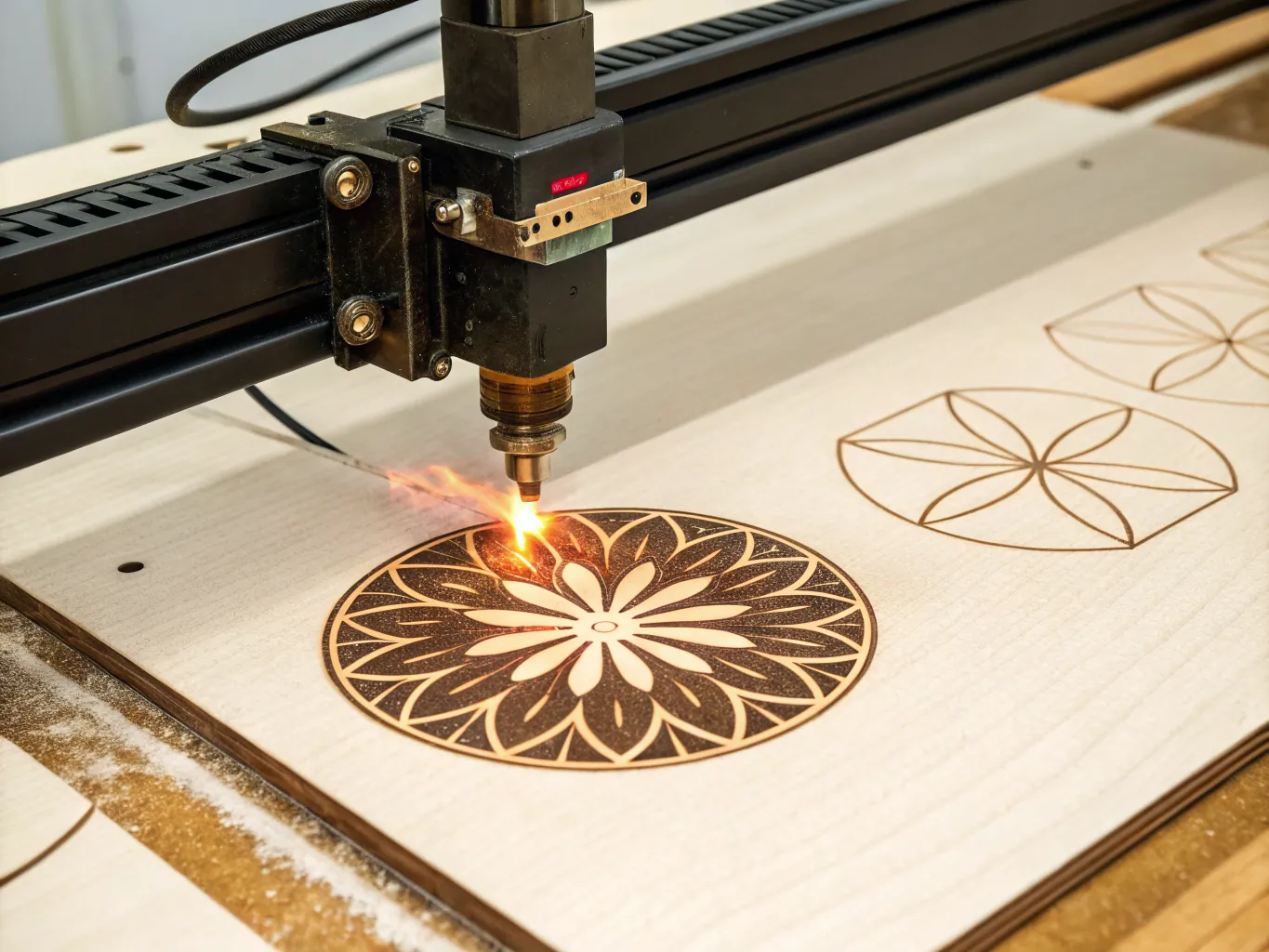
A workshop machine reads geometry. It needs closed strokes with a declared weight, a single color, an empty background and the final size in millimeters. An artificial intelligence image delivers shadow, gradient and texture, and a laser or a plotter discards that information. Someone turns the pixel grid into a tool path before anything switches on, and that is where the detail that survives at real size gets decided.
An image generated with artificial intelligence arrives complete. It carries shadow, highlight, gradient and lettering that looks hand drawn. On screen it is resolved. Once that file reaches a workshop it starts asking for things that a person adds by hand.
What it asks for has a name and can be counted. Our piece bank holds 1,264 records with the field for where production breaks filled in, and 53 of them name fine strokes, thin lines or small text as the exact point where the piece fails. The geometry of a drawing is a workshop matter with a file of its own.
The file becomes a tool path
That image is a grid of colored pixels. A laser, a cutting plotter and a foil press work with coordinates and with a power setting assigned to each path. Someone turns the grid into closed strokes before anything switches on, and that conversion decides almost everything that follows.
Two states of the same drawing share this panel. The rosette runs rasterized, so the laser sweeps the surface row by row and leaves the petals light. The circles on the right run as line work, and the head follows the outline once and lifts. The bank record puts that decision in the first step of the route. The art moves to vector or to a grayscale bitmap, and that is where rasterized areas and line work get defined. The file declares which of the two recipes it wants.

Half a millimeter
Half a millimeter is the practical threshold for a clean stroke in fine line work. Above that measure the line holds and breathes. Below that measure the line closes and prints as a solid bar. A one point line closes in engraving, always. This is craft knowledge of the technique.
This monogram comes from a kit of test marks and it concentrates the risks. The circle that wraps the letters is a thin stroke of constant weight, and the terminals of the A and the V taper to a knife edge. The bank record describes both faces of the risk. Under heavy pressure that fine line fattens and the monogram loses its air. Under light pressure it breaks and leaves gaps along the stroke.
This other logotype reaches the same size with ease. The two mountains the record lists run at constant weight, the peaks open into a vertex and the horizon ends in a round cap. The route on that record spells it out. Being a line mark of constant weight, the laser resolves mountains and letters in a single pass.
Every material closes the stroke in its own way
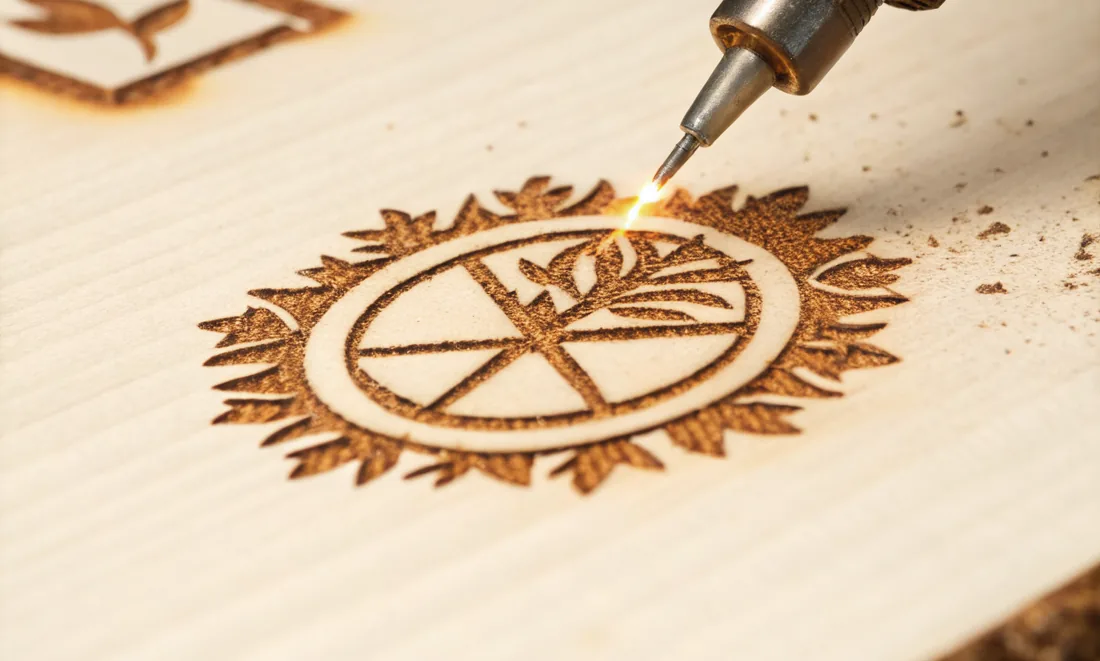
Laser engraving on pale wood spreads as the power rises and comes out faint as it drops. The outer rays of this emblem hold because they are wide shapes with air between them. The small branch at the center, drawn in thin lines set close together, is already melting into a single brown patch. The record adds the fact that governs the run. Grain makes the same stroke land differently from board to board, so the power recipe gets tested on an offcut from the same lot.
White screen printing ink on a dyed garment asks for two passes with a flash cure between them, and that is craft knowledge of the technique as well. The first layer seals the weave and the second delivers the white. That second pass fattens the thin stroke and closes the counters, so fine text that looks open on screen arrives with the letter o filled in.
On kiss cut the bank record is explicit. Very small shapes under 10 mm lift on their own inside the roll or stay stuck to the waste during weeding. That ring of tiny stars that artificial intelligence placed around the logotype ends up as confetti.
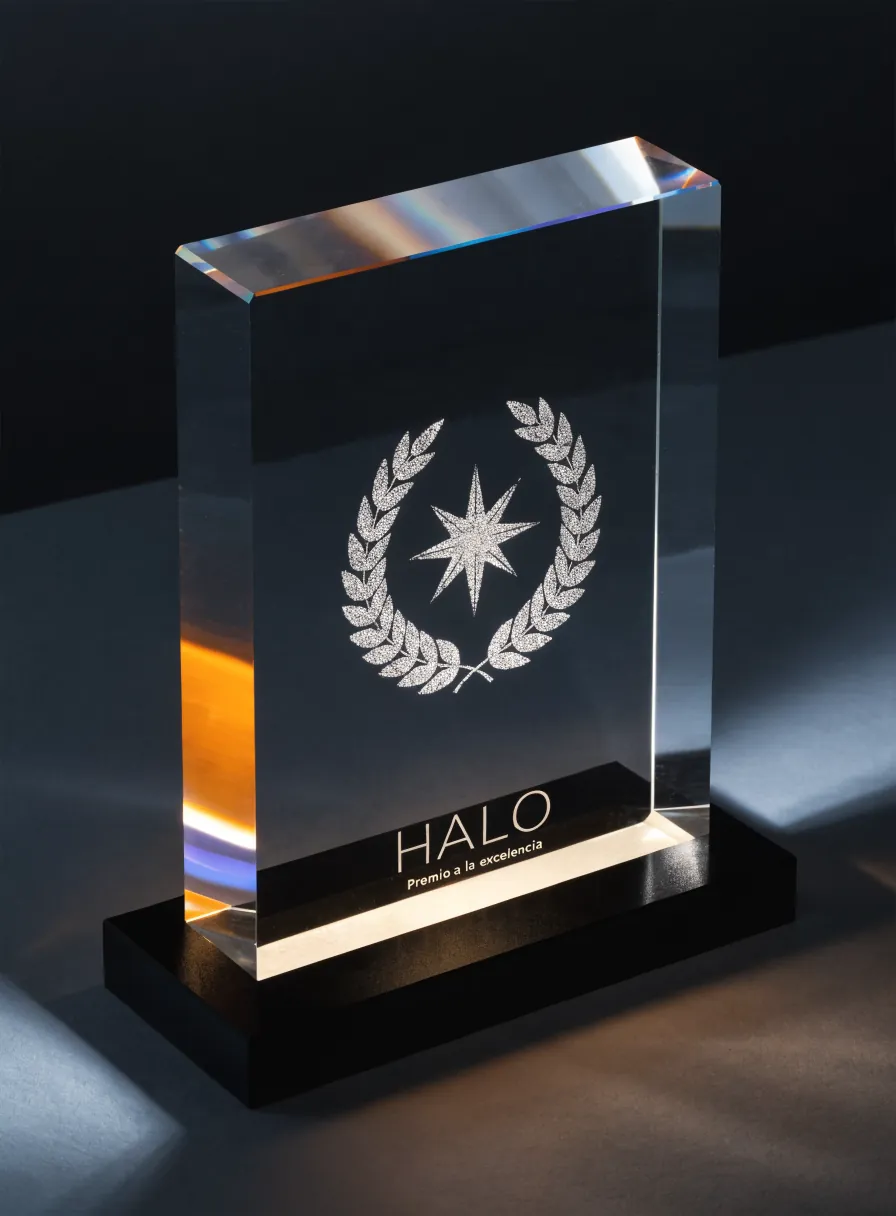
Subsurface engraving in crystal is built from a cloud of points. Every leaf of this laurel is a field of microfractures that the base lights from below. The record names the limit at its first breaking point. The internal laser leaves microfractures that read as haze when the file carries too much point density and the operator raises power to make it show. Look at the stems that cross at the foot of the wreath, where the drawing thins and the cloud has fewer points.
Registration lands on the same stroke
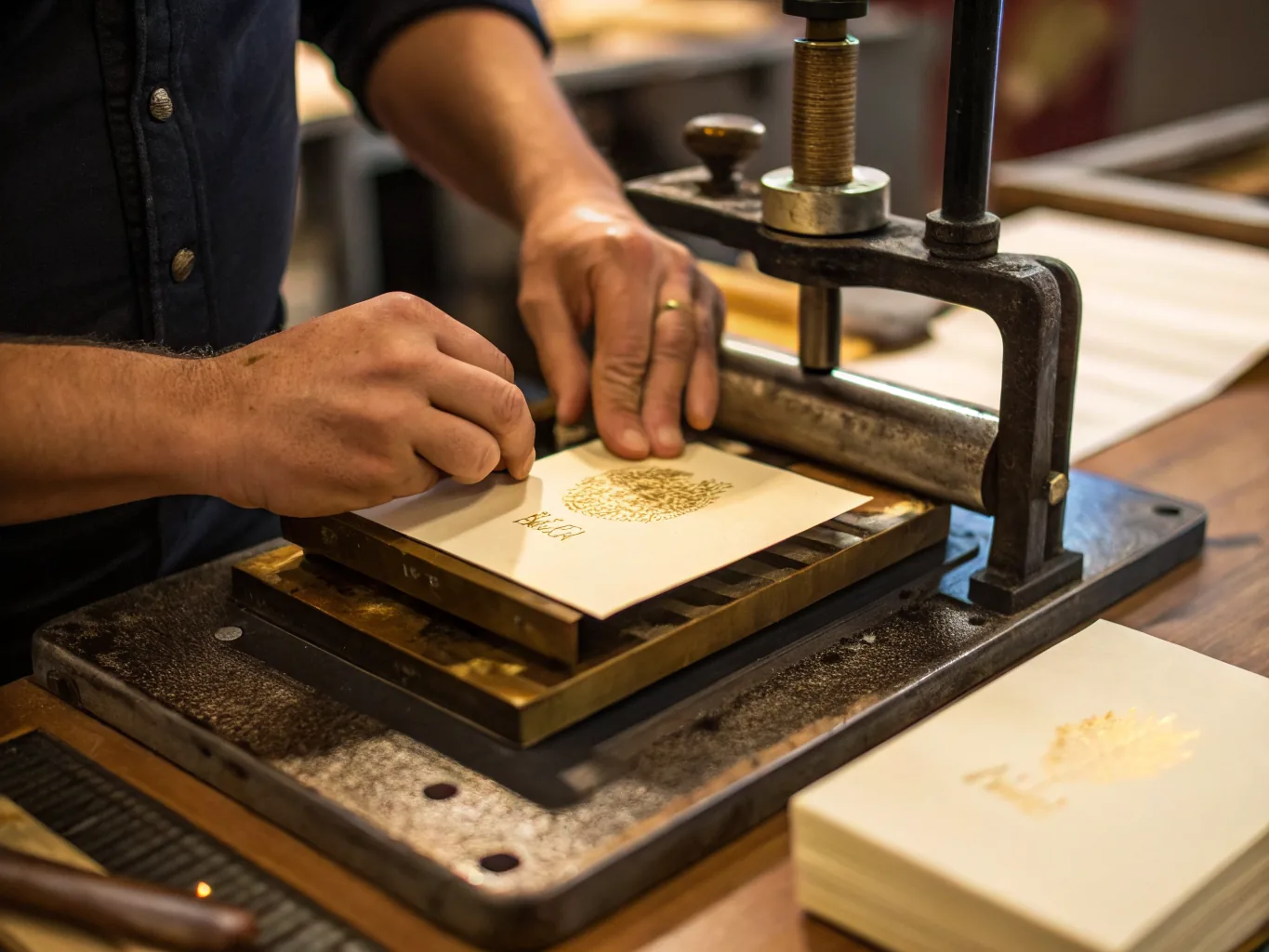
A monogram debossed dry and then inked with foil runs as two separate passes. On the monogram record they live in separate steps and in separate workshops, foil and hot stamping on one side, blind deboss and emboss on the other, and the second one is described as deboss registration over the same stroke. Landing both on that stroke is a demand of the craft, and the bank shows how much it weighs, since registration appears on 71 records in the field for where things break.
Here a person sets the sheet against fixed guides and the brass die comes down hot on the fiber. The emblem on the front came out even. On the block to the right the same mark went flaky where the foliage folds over itself. Look at the line under the emblem as well, a run of metallic marks that never assembles into a letter. A generator delivers the texture of text and leaves the text itself for a person to draw.
A piece like the trophy above travels through five different workshops on its route. The route runs through crystal cutting and polishing, internal laser 3D crystal, pad printing, fine carpentry and cabinetmaking, and final assembly and finishing. Every border reads the file again, and a file that declares its measurements arrives the same way at all five.
How to ask artificial intelligence for a file a workshop can run
Ask for the image in high contrast and a single color, with the background empty. Gradients, shadows and reflections are information the machine discards. Ask for closed, filled shapes with air between them. Declare the final size in millimeters from the first prompt, because the same drawing on a wall plaque and on a pendant poses two different exercises in geometry. Separate the cut areas from the engraved areas in the artwork itself.
There is a desk test to run before sending anything. Print the image at the exact size of the piece and look at it at arm's length. Whatever reads closed on paper closes further in the material.
Geometry is the human part of the work
Artificial intelligence has shortened the road from idea to image in a way that surprises. The stretch that follows lives in geometry, and vectorization carries the weight there, where a person redraws the stroke at a declared thickness and decides which detail survives at real size. That step is what lets the Atelier's finishes arrive clean. Half a millimeter decides the air a piece carries when it reaches a person's hands, and that decision gets made in front of the screen.
If you have an image saved and you want to know what it needs in order to run, share it with us. Reading it is the first step.
Questions that come up often
Why does a logo made with artificial intelligence need preparation before engraving?
A generated image arrives as a grid of colored pixels. A laser, a cutting plotter and a foil press work with coordinates and with a power setting assigned to each path, so someone turns that grid into closed strokes before anything switches on. That conversion defines what runs rasterized and what runs as line work, and it decides almost everything that follows.
How thin can a line be before it closes?
Half a millimeter is the practical threshold for a clean stroke in fine line work, and this is held as craft knowledge of the technique. Above that measure the line holds and breathes. Below that measure the line closes and prints as a solid bar. A one point line closes in engraving, always.
How do I ask artificial intelligence for an image that can be produced?
Ask for the image in high contrast and a single color with the background empty, because gradients, shadows and reflections are information the machine discards. Ask for closed, filled shapes with air between them. Declare the final size in millimeters from the first prompt and separate the cut areas from the engraved areas in the artwork itself.
Does the same drawing look the same on wood, on fabric and on crystal?
Every material closes the stroke in its own way. Laser engraving on pale wood spreads as the power rises, and grain makes the same stroke land differently from board to board. White screen printing ink on a dyed garment asks for two passes, and the second one fattens the thin stroke and closes the counters. Crystal is built from a cloud of points.
How do I check for myself whether my image holds up before sending it?
There is a desk test to run before sending anything. Print the image at the exact size of the piece and look at it at arm's length. Whatever reads closed on paper closes further in the material. That single review brings small text, terminals that taper to a knife edge and lines set close together into plain view.
Follow the thread
Three doors to continue the journey.
Have you imagined yours?
Tell us what you imagine and who it is for. We listen first, and from there we create it with you until you hold it in your hands.