The step that closes the piece almost never appears in the brief
In 805 of the 1,291 records in the Atelier's bank the production route crosses a table where one person works each piece on its own. That line decides the finish, and it usually stays out of the opening conversation.
The step that closes a piece is the final hand finishing, a table where someone assembles, paints the edge, seals the wax or numbers each unit one at a time. In the Atelier's record bank it appears in 805 of 1,291 records and it is the most frequent label in the whole bank. Naming it in the brief, in the same type used for the main process, puts the project in order.
A finished piece reaches a pair of hands as one whole object. The route that produced it reads as a list of workshops, and that list almost always ends in the same place, a table where one person works each piece on its own.
The Atelier's record bank holds 1,291 production records, and 1,264 of them carry the route written step by step, with the type of workshop that runs each step. The label that appears in the most records across the whole bank is final assembly and finishing work, present in 805. Beyond that, 1,178 records close their route in final assembly and finishing work or in packing and kitting. The last line of almost any route belongs to a person sitting in front of the piece.
That line is exactly the one missing from most of the briefs that arrive at the opening table.
What the step says when you open it
The text of that step inside the records rewards a close read. Glue the liner into an envelope and assemble it. Press a block of cards and paint the edge coat by coat. Flame seal the end of a grosgrain ribbon and mount the bow. Press, fold and hang a shirt on its hanger. Number the neck label by hand. Check sheet by sheet and box with interleaving tissue.
In 151 records the text of that step names the hand outright, with one of these phrases inside the step itself, by hand, manual, piece by piece, one at a time, one by one, sheet by sheet or edge by edge.
That work carries a property planning tends to skip. It advances at the pace of people, and the piece crosses that pace at the exact moment it already holds the value of every earlier stage.
When the finishing is the whole piece
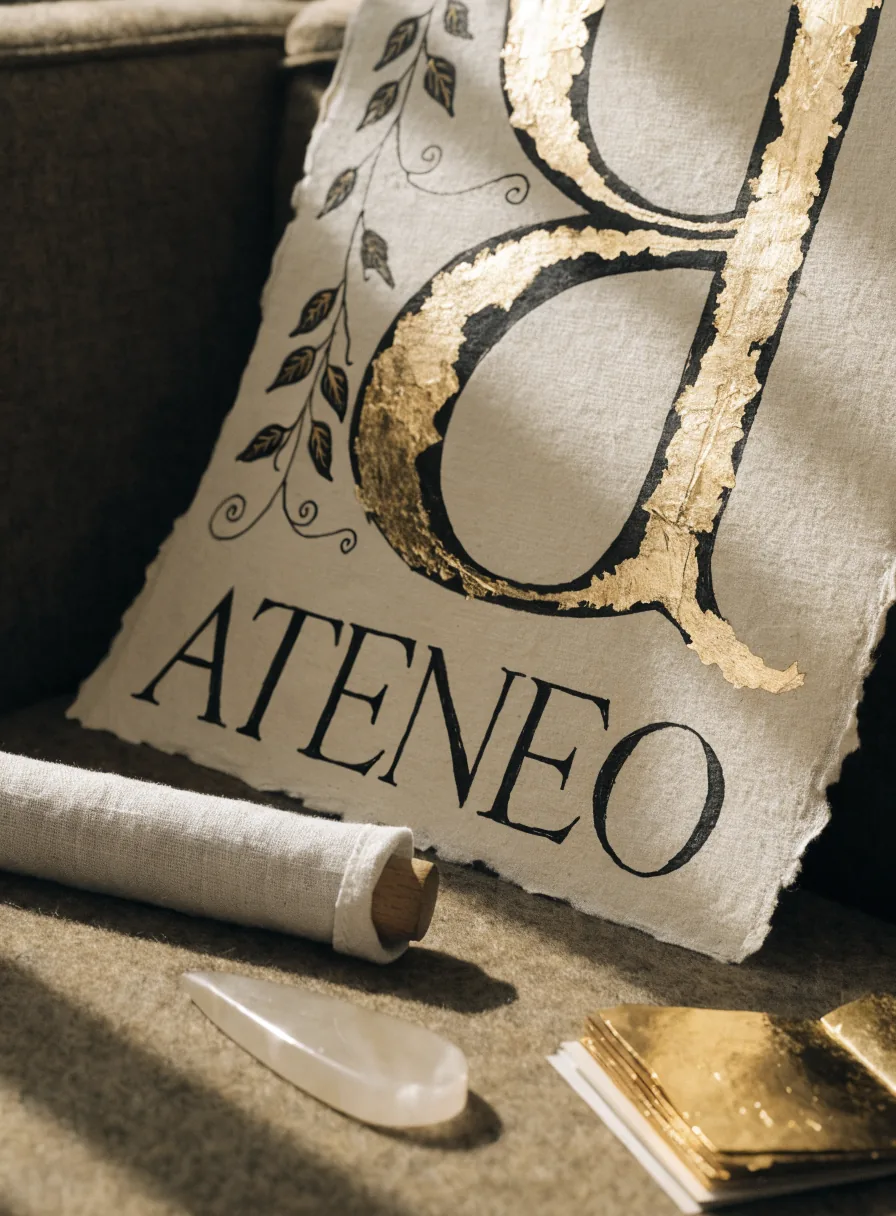
The diploma in the first photograph declares four steps in its route, and three of them carry the same label of final assembly and finishing work. The remaining step sources the sheet of raw cotton paper with a deckle edge.
The other three are pure craft. A calligrapher draws the initial and the text in iron gall ink. A gilder lays the size, waits for it to come to tack, sets down the loose leaf gold and burnishes it with the agate stone resting on the felt in the photograph. At the end he seals the surface with a light shellac so the gold holds up to handling.
The bank holds 71 records with two or more steps under that same label. This is one of them, and it shows how far this reaches, the entire route lives on the table.
Leaf gilding works with loose gold in sheets of around eight centimeters a side, thin enough that the air of one breath lifts them off the book. The craft knows this, and it explains why the step moves from one piece to the next at the pulse of a person.
Where the scarcity lives
Hot foil stamping is installed industrial capacity and it comes with relative ease. It appears as a route step in 310 records in the bank, and it stands declared as critical capacity in 173 of them, counting the records whose critical capacity field names foil or hot stamping.
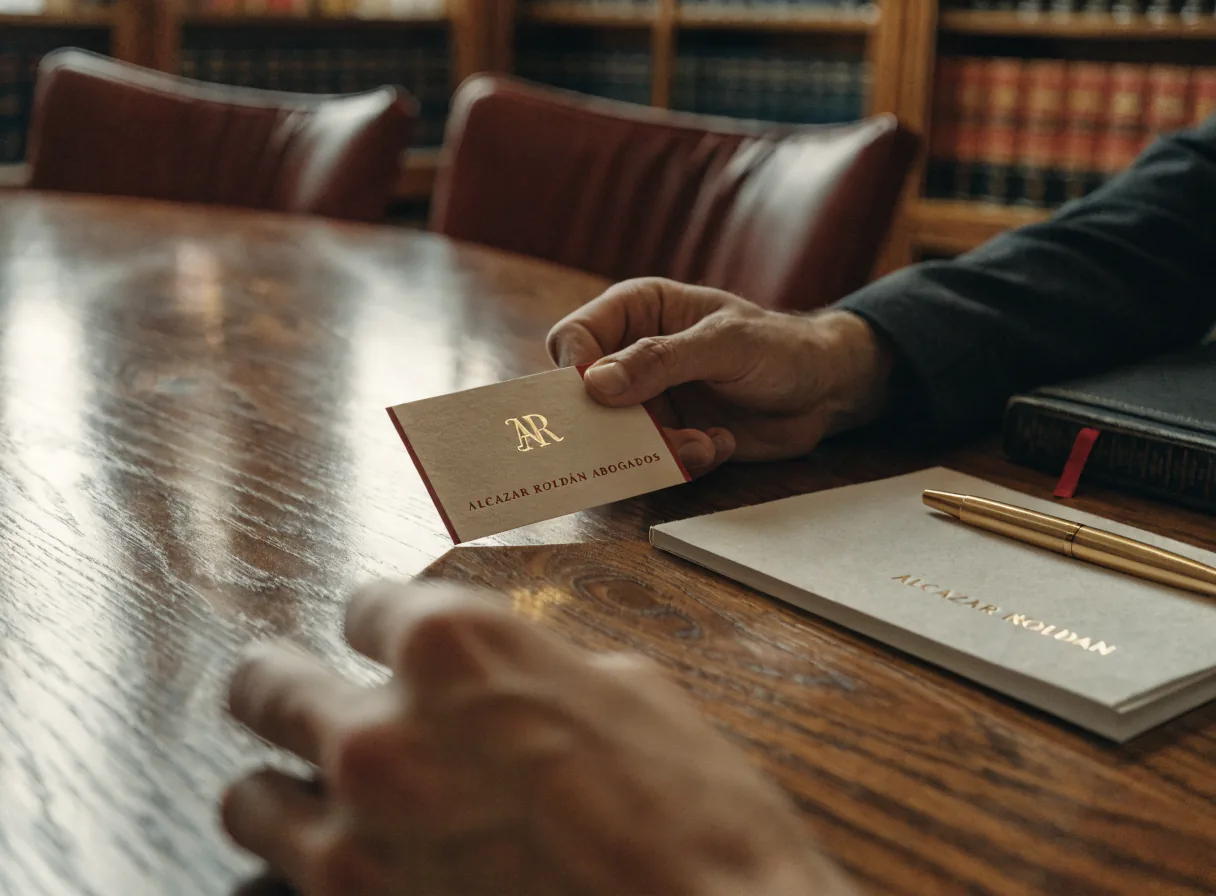
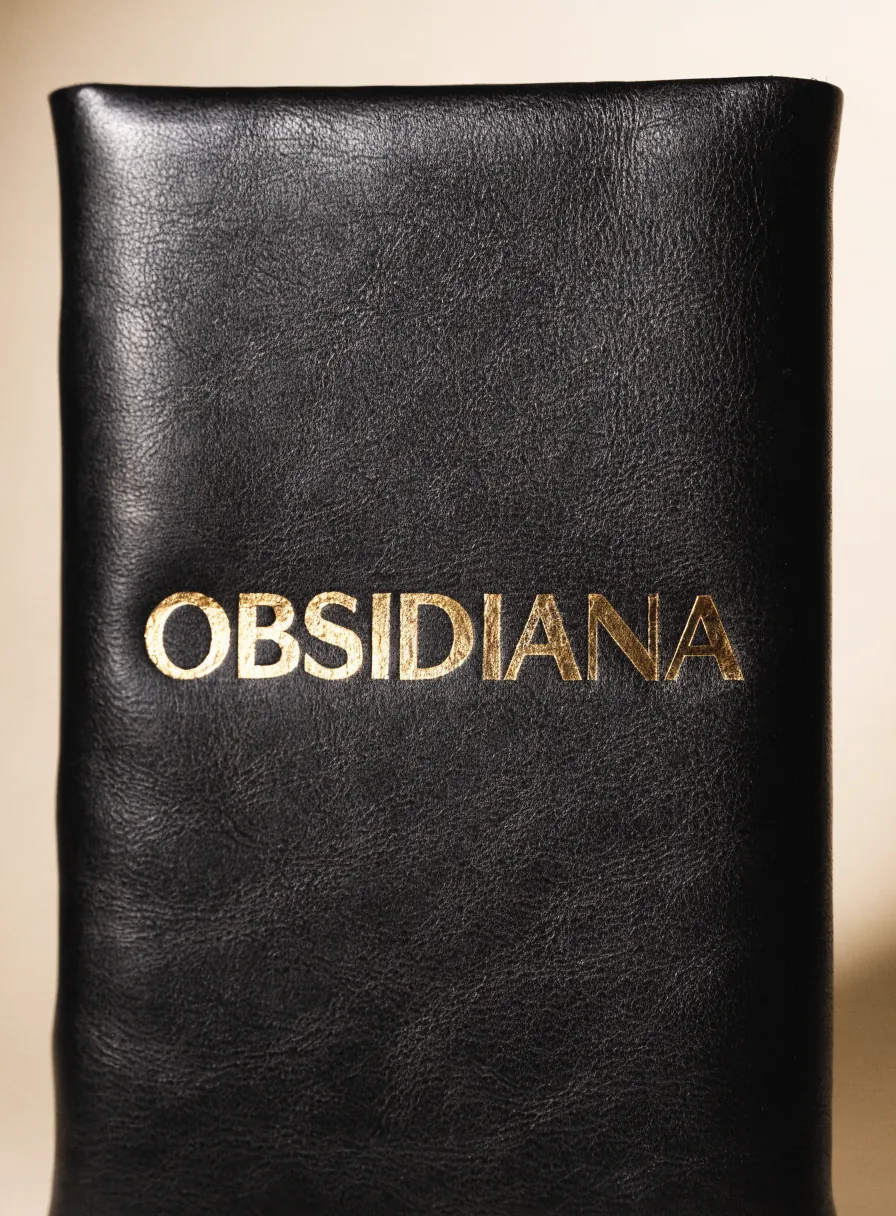
The card in the second photograph carries that foil on the monogram and on the company name. Its record places the critical capacity somewhere else, an even hand painted edge, and puts the scarcity in the hands able to leave that edge clean of runs and free of crazing.
In 121 records in the bank the declared critical capacity names the hand, with the words by hand, manual or artisanal inside that field. The scarce craft stands written, record by record, in the same place where the scarce machine is written.
A painted edge builds up in thin coats with drying time between them, three or four depending on the body of the paint. That is technique knowledge too, and it produces the rule the craft repeats, paint laid on thick in a single pass crazes the moment the card flexes between your fingers.
The line that carries what changes in every piece
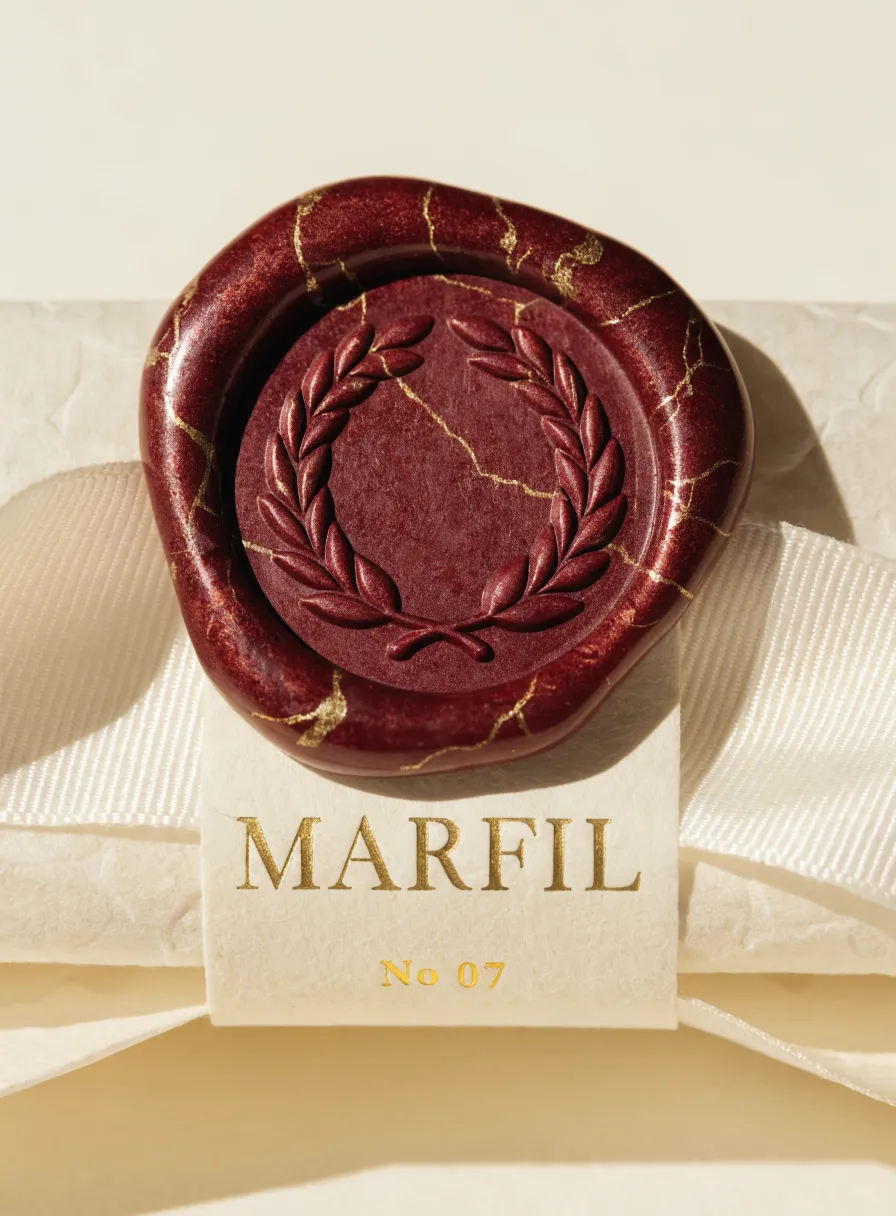
The seal in the third photograph carries two waxes, the wine red and the gold, blended and poured so the vein runs differently every time. Its record says so in those words, one at a time because the veining never repeats. The card underneath carries the name and the serial number in gold foil, and a variable serial number calls for a modular die or digital foil.
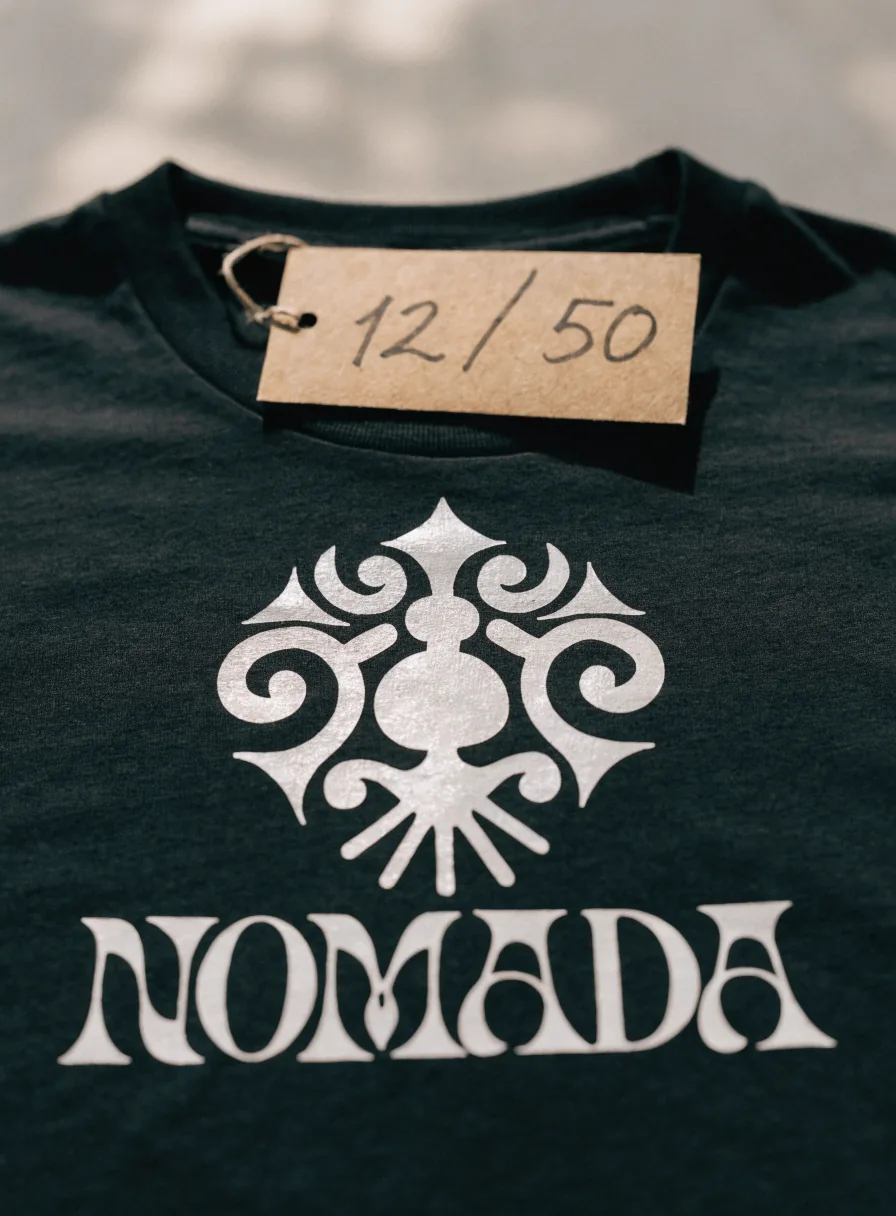
The tee in the fourth photograph repeats the logic in another material. The silver metallic foil goes on with a heat press over a screen printed adhesive laid in the exact area of the emblem. Then comes the step that gives it identity, the handwritten numbering of the neck label, garment by garment, with individual review.
Everything that changes from one piece to the next lands on that last line. The name, the serial number, the edition number, the vein in the wax. That is why the step resists automation with such stubbornness, and why it deserves to be planned by name.
What changes in the opening conversation
Three concrete points put a project in order when this step stays in view from the first day.
The final step gets named in the brief in the same type used for the main process. A brief that says gold foil and stays silent on the painted edge describes half the piece.
The final step earns its own approval against a physical sample. The foil proof approves the foil. The edge, the bow, the wax seal and the numbering are born after that, and they ask for their own review round with the piece already assembled in hand.
The workshop that runs that step joins the table early. It is the partner that touches more of the project surface than any other workshop in the bank, with 805 records passing through its label, and it is the one that sees the complete piece before the box closes.
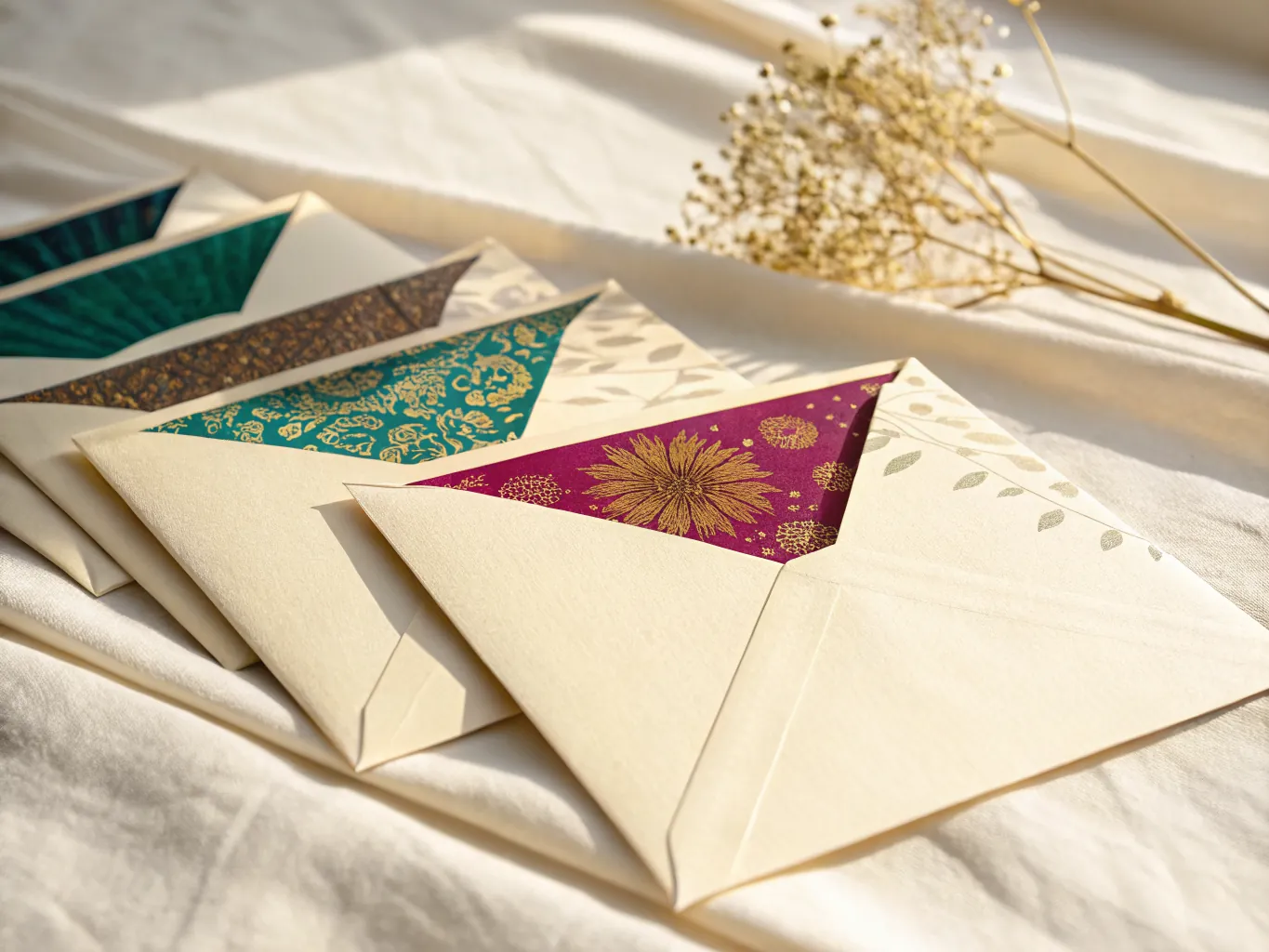
The envelopes in the fifth photograph close the argument. Four distinct liners, printed in gold and cut with their own dies so they match the flap. All of it arrives at a table where someone glues the liner inside the envelope and assembles it. When that gluing drifts out of alignment, the liner peeks out along one side and the whole piece is rejected, with the four earlier stages impeccable.
The production route names machines on almost every line. The last one names a person, appears in 805 of the 1,291 records in the bank, and decides how the piece looks the day it reaches a pair of hands.
Questions that come up often
What is the final finishing of a piece?
It is the work that happens at a table, with the piece handled one at a time. Glue the liner into an envelope and assemble it. Press a block of cards and paint the edge coat by coat. Press, fold and hang a shirt. Number the neck label by hand. In the Atelier's record bank that label is called final assembly and finishing work.
How often does a job end in the hands of one person?
The Atelier's record bank holds 1,291 production records and 1,264 carry the route written step by step, with the type of workshop that runs each one. The label of final assembly and finishing work appears in 805 of those records, and 1,178 records close their route in that label or in packing and kitting.
What is hardest to source for a piece with gold foil?
Hot foil stamping is installed industrial capacity and it comes with relative ease. It appears as a route step in 310 records in the Atelier's bank and it stands declared as critical capacity in 173 of them. The scarcity tends to live in the hand. In 121 records the declared critical capacity names the hand, with the words by hand, manual or artisanal inside that field.
Does approving the foil proof approve the piece?
The foil proof approves the foil. The painted edge, the bow, the wax seal and the numbering are born after that, and they ask for their own review round against a physical sample, with the piece already assembled in hand. That is why the final step deserves to be named in the brief in the same type used for the main process.
Follow the thread
Three doors to carry the journey forward.
Have you imagined yours?
Tell us what you imagine and who it is for. We listen first, and from there we create it with you until you hold it in your hands.