The scarcest step leads the conversation
Every piece is a route of linked workshops, and that route moves at the pace of the link with the least supply. Here is how to find that link inside your own piece and what to ask it before the artwork is locked.
Every piece travels a route of linked workshops, and that route moves at the pace of the link with the least supply. The scarce step governs the tolerance, and when it is called late it governs the redesign. You find it by marking the steps that ask for a tool made to measure and the steps that rest on a hand trained over years. The call to that workshop happens before the artwork is locked.
A piece is a route, and the route has a bottleneck
The Atelier's spec bank holds 1291 records. Each one carries the production route step by step, with the type of workshop that runs each step, and 1256 of those records ask for two or more distinct workshop types. The bank counts routes written record by record, and a national census of workshops is a separate matter.
The piece that reaches the delivery table as a single object is the end of a chain of different hands, and that chain moves at the pace of the link with the least supply. We call that link the scarce step. It governs the tolerance, it governs the calendar, and when it is called late it governs the redesign.
The struck medal, where the scarce step is the second one
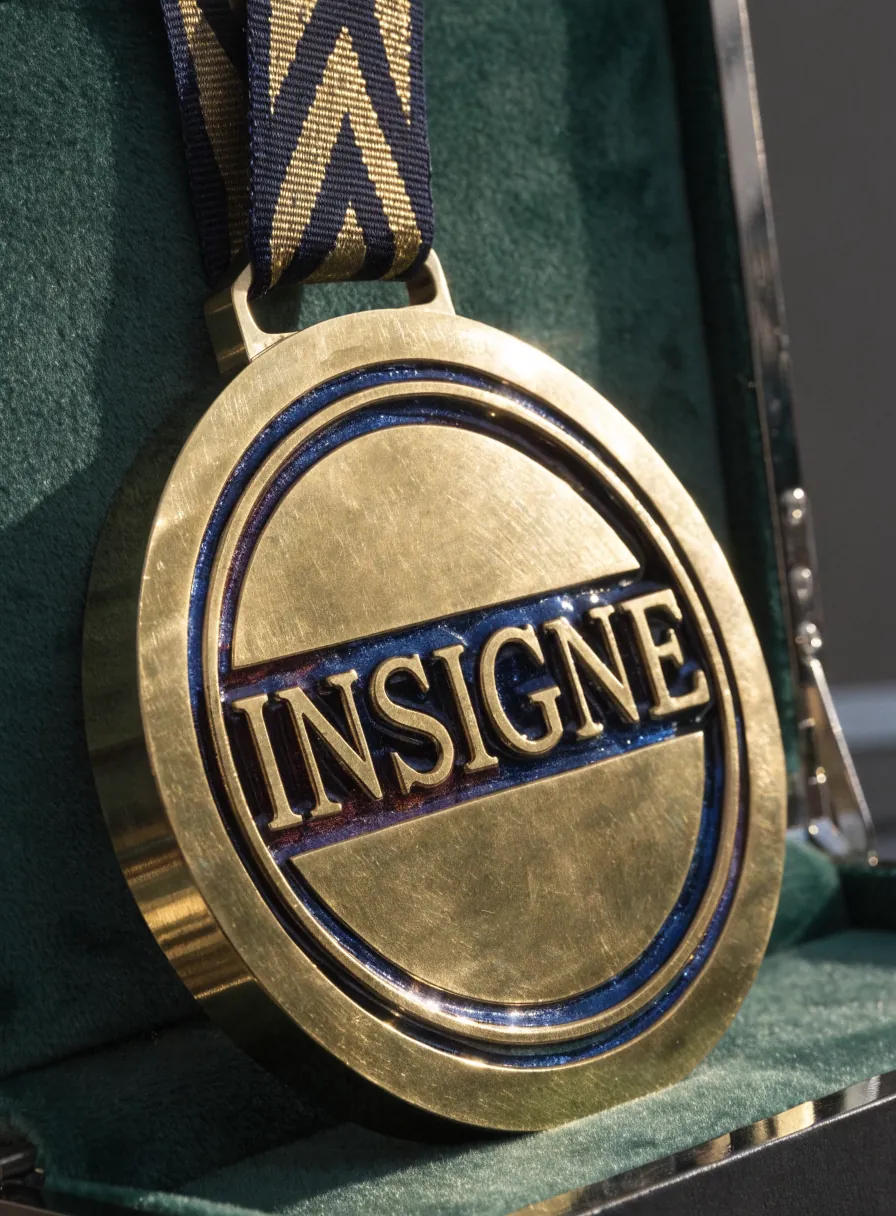
The medal in the photograph carries the word raised above a channel of blue enamel, with two stepped concentric rings around it. Its route runs eight steps and eight distinct workshop types, one per step. The critical capability its record declares lives in step two, the deep relief coining in several strikes with annealing, and step one exists to serve it. Step one is where the master die is machined.
That strike and anneal cycle is pure craft. Brass hardens every time the press deforms it, and annealing, which in brass runs around 500 to 600 degrees Celsius, returns it soft enough for the next strike to push more material into the bottom of the letter. Run in full, the cycle fills the typography all the way into the corner. When it is cut short, the metal thins and hairline cracks appear, and they surface only after the gold plating, with the piece already through five distinct workshop types.
The bank shows a useful precision here. Die stamping and die cutting appears 361 times as a step, spread across 354 records, so the category is plentiful, and the scarcity lives inside it. It lives in the press and the process that fill letters of that volume while the brass stays whole. This is why the call to that workshop happens before the artwork is locked. That workshop knows the depth its press fills in its own alloy, and it returns the figure that orders the design.
The same family, a different physics
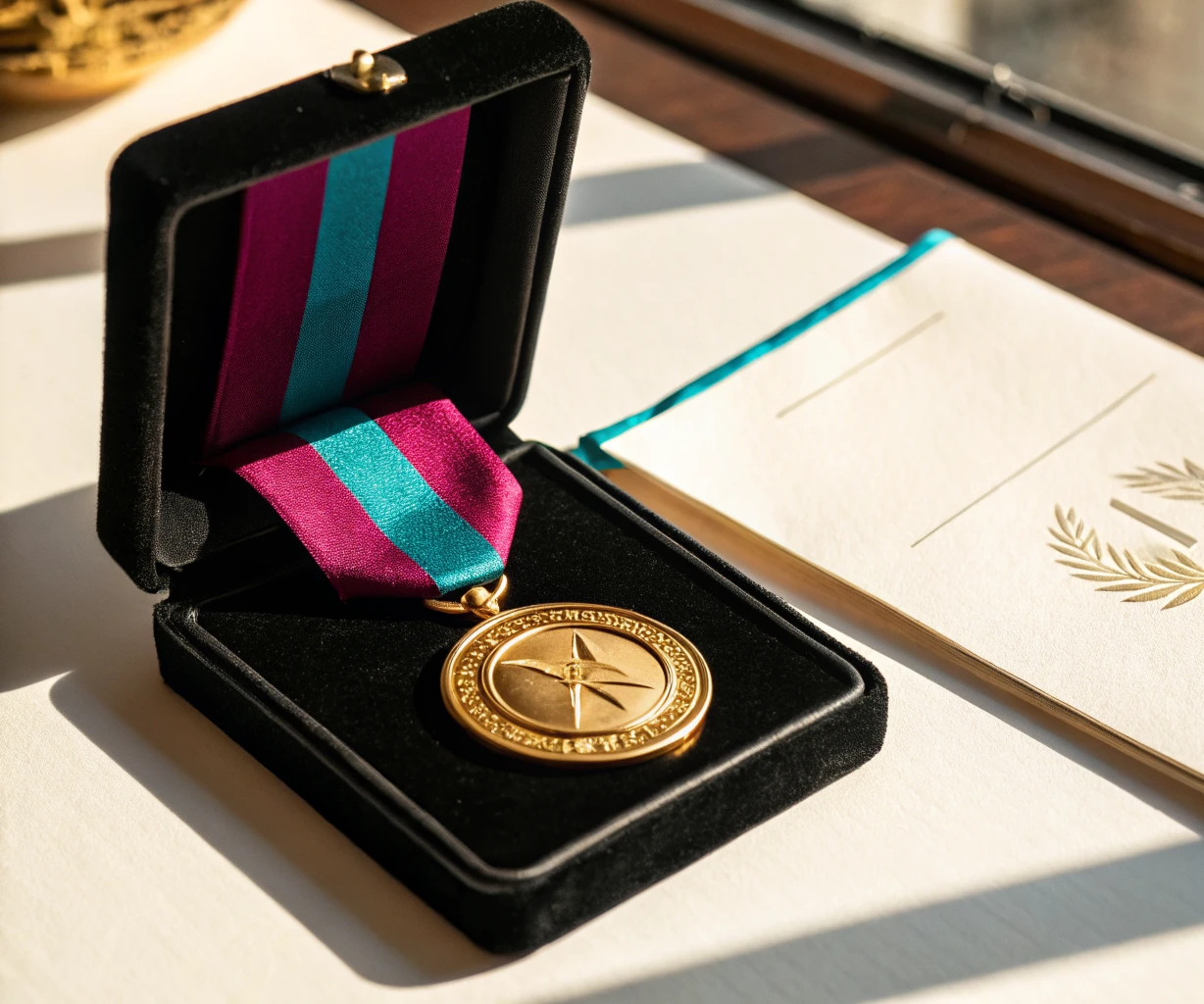
This second medal carries an eight point star in low relief and a fine perimeter border. Its route runs seven steps and seven distinct workshop types, and its critical capability lives again in the coining die with clean relief, which is engraved in the first step.
Engraving metal and raising high relief are two separate capabilities, each one with its own physics and its own supply. Engraving removes material with a laser or a cutter, and in the bank it appears 215 times as a step, spread across 210 records. High relief pushes material against a master die carved for that one piece, and the workshop that carves that die, jewelry and micro engraving, appears 39 times as a step in 33 records. The abundance of one capability stays silent about the availability of the other.
Tool geometry governs just as much. An inside corner comes out with the radius of the tip that cuts it, so a cutter one millimeter in diameter leaves half a millimeter of radius at every internal vertex. Casting in zamak delivers soft edges and serves a broad mass emblem well, and a fine border with thin lettering asks for a stamping die from the first call.
The award plaque, a wide route
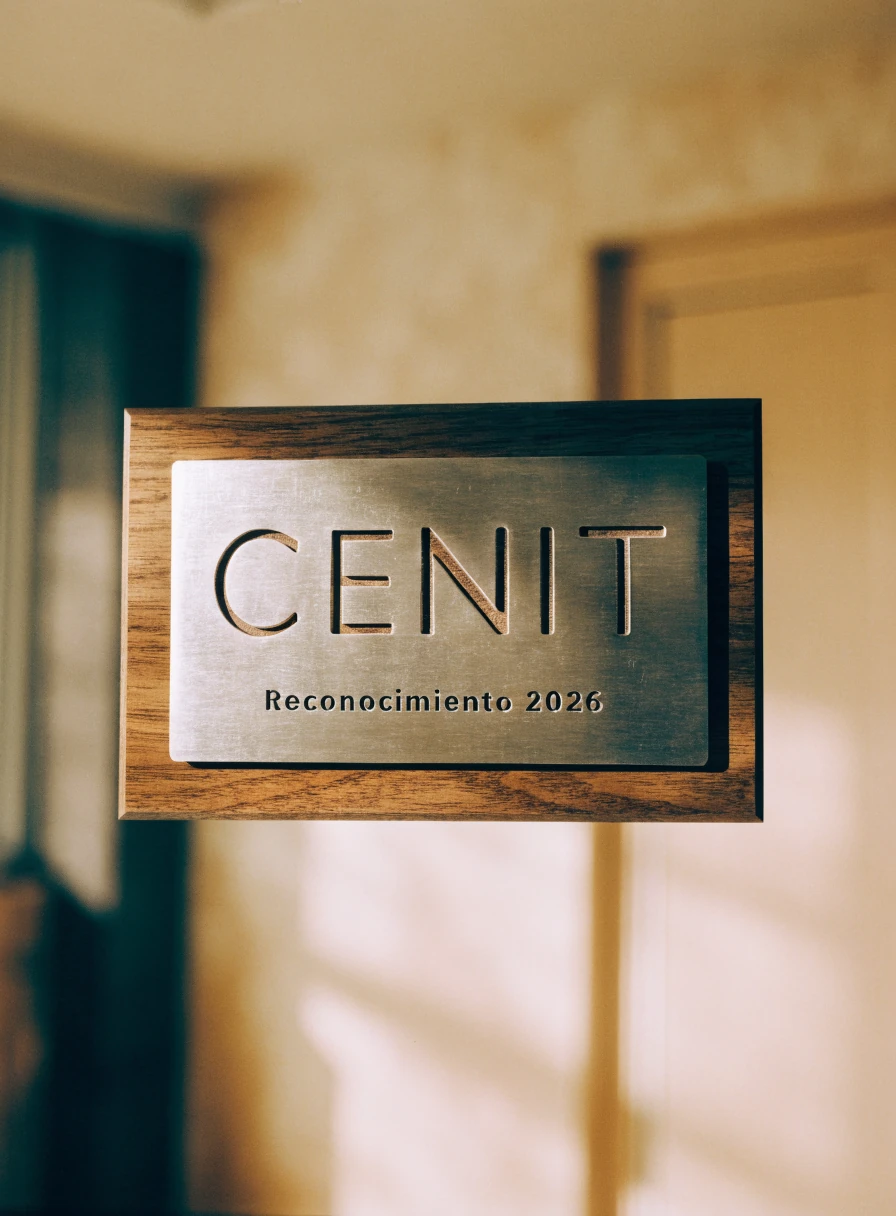
This award plaque carries a brushed plate with the name sunk in deep engraving, mounted on a beveled nogal base. Its route runs seven steps and five distinct workshop types, because cabinet work and assembly each enter twice. Its record declares the whole route widely installed in Mexico, and the bank supports the reading. Fine carpentry and cabinetmaking appears 223 times as a step, and laser engraving appears 215 times.
With a wide route the work moves toward tolerance, at the two points where the record declares the piece breaks. Deep engraving leaves a fused burr at the edge of the letter, rough to the touch until someone brushes it back. Solid wood moves with humidity, and that movement is known craft. It runs on the order of one to two millimeters across the width for every hundred millimeters of board between the dry season and the wet one. The plate asks for a fixing that allows that travel and a seal that reaches into the pore.
The short list for the award plaque lives in the cabinet shop that delivers bases with a clean bevel and a calibrated thickness, and that remains the first call.
When the scarce step is a hand
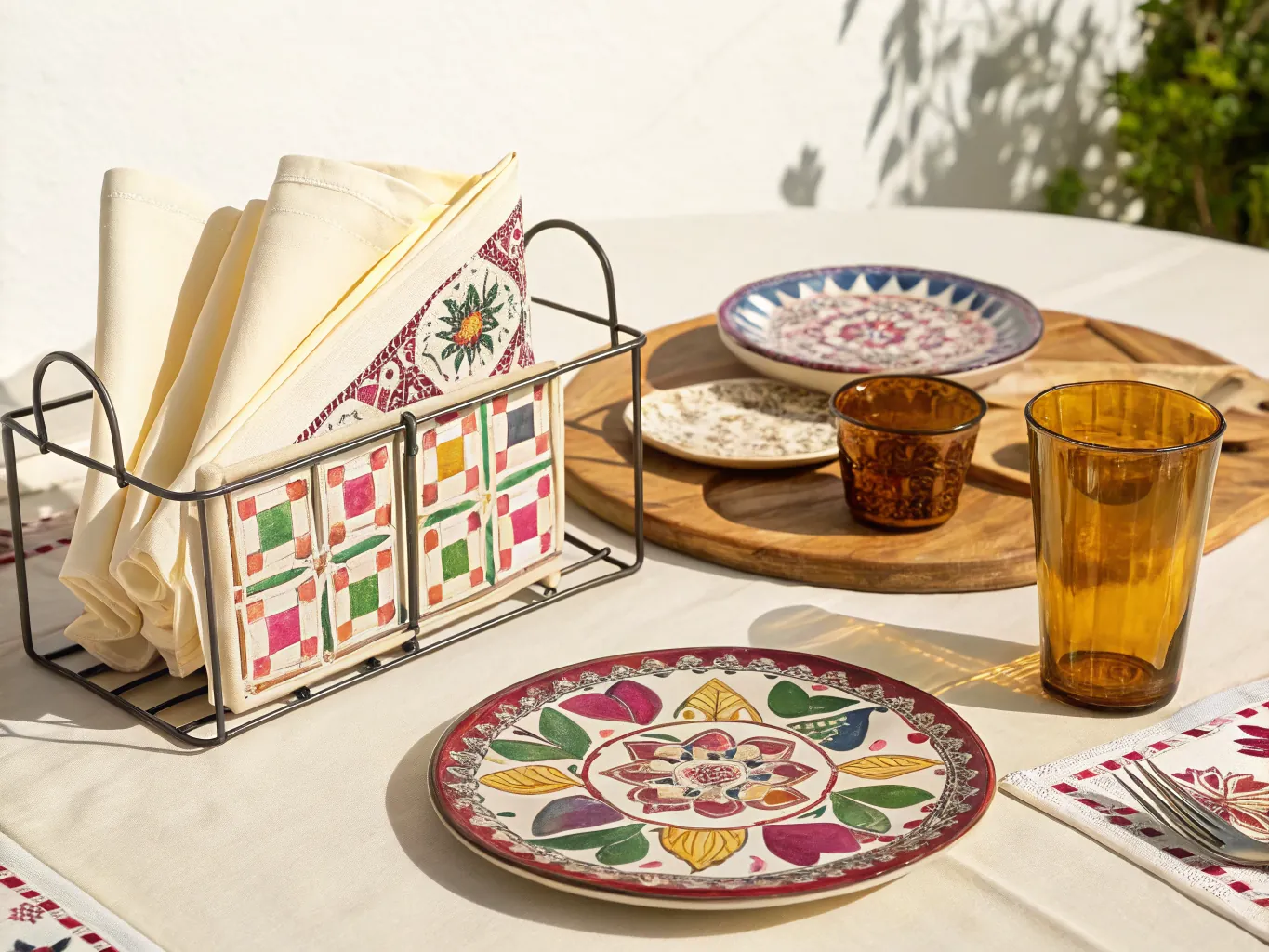
This table setting brings together hand painted talavera, the tin glazed earthenware of Puebla, a rod napkin holder set with tiles, and blown glass tumblers in amber. Its route runs seven steps and seven distinct workshop types, with ironwork, industrial embroidery and glassblowing among them. Six of those seven resolve with several options open.
The bottleneck lives in the freehand decoration over the tin glaze, the one capability on this table held by a hand trained over years according to its record. That glaze fires near one thousand degrees, a figure the craft supplies and the record leaves open, and the decoration goes on while the glaze is still raw and porous, so the stroke stays exactly as it falls from the brush and the firing sets it. In the bank, talavera and glazed earthenware appears 38 times as a step, spread across 13 records.
That hand also brings a property that is declared in the first email. The glaze crazes, and every piece comes out with its own variation, which is the signature of hand painting.
How to read your own piece
Write your piece as steps in order and put the type of workshop that runs each step next to it. The bank's vocabulary uses 48 workshop values and 47 of them are workshops, so the list for an ordinary object fits in full on one view.
Then mark two classes of step. First, the ones that ask for a tool made to measure for that one piece, meaning a master die, a stamping die, a mold or a cutting die. Second, the ones that rest on a hand trained over years. That subset holds your short list almost every time.
The bank shows where declared scarcity concentrates. Foil and hot stamping appear in the critical capability field of 173 records; with the same search, embroidery appears in 70 and glass or crystal in 52. Another 36 records write the phrase few workshops in that same field.
With the short list identified, four questions go to the workshop that owns the scarce step before the artwork is locked, and every one of them is physics. What minimum line thickness its tooling fills. How much relief depth it raises while the material stays whole. What radius it asks for at inside corners. What its process does to the color the artwork carries. With those four answers written down, the artwork is locked once, it travels the full route, and it arrives whole at the delivery table. The scarcest step leads, and the conversation starts there.
Questions that come up often
How many different workshops does a custom piece pass through before it is finished?
The median is four distinct workshop types and the average reaches 4.38. Of the 1291 pieces in the bank, 1256 name two or more workshop types in their route and 1174 name three or more. A piece that looks simple, such as a card with a painted edge, has almost always traveled through three hands before it is ready.
How do I know which part of my piece is the hardest to source?
Write your piece as steps in order and note the type of workshop that runs each one next to it. Then mark two classes of step. First the ones that ask for a tool made to measure for that one piece, meaning a master die, a stamping die, a mold or a cutting die. Second the ones that rest on a hand trained over years. That subset holds your short list almost every time.
Why is it worth talking to the workshop before you approve the design?
Because the workshop that owns the scarce step knows the physics of its tooling and returns the figure that orders the design. Four questions go to that workshop before the artwork is locked. What minimum line thickness its tooling fills. How much relief depth it raises while the material stays whole. What radius it asks for at inside corners. What its process does to the color the artwork carries. With those answers the artwork is locked once.
If many workshops engrave metal, why is high relief hard to find?
Engraving removes material with a laser or a cutter, and high relief pushes material against a master die carved for that one piece. These are two different physics. In the Atelier's bank, engraving appears 215 times as a step, spread across 210 records, and jewelry and micro engraving, the workshop that carves that die, appears 39 times as a step in 33 records.
Why does every hand painted talavera piece come out different?
The freehand decoration goes on over the tin glaze while it is still raw and porous, so the stroke stays exactly as it falls from the brush and the firing sets it. The glaze crazes and every piece comes out with its own variation, which is the signature of hand painting. In the Atelier's bank, talavera and glazed earthenware appears 38 times as a step, spread across 13 records.
Follow the thread
Three doors to carry the journey forward.
Have you imagined yours?
Tell us what you imagine and who it is for. We listen first, and from there we create it with you until you are holding it.