Why a gold foil comes out speckled
The same strike with the same die closes to a mirror on one leather and leaves a constellation of dots on the next. The difference lives in the pore of the leather and in the thread crossings of the cloth, and your fingernail reads it long before the press heats up.
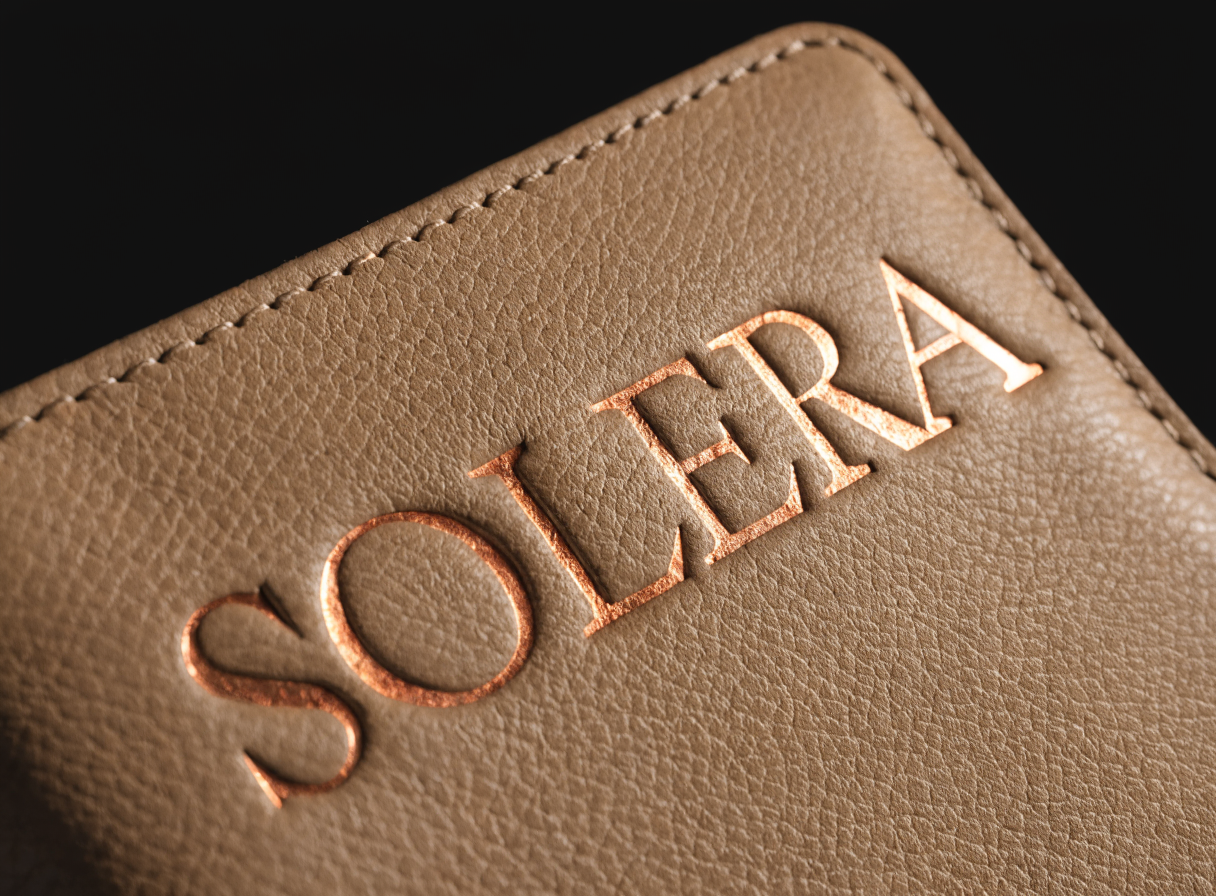
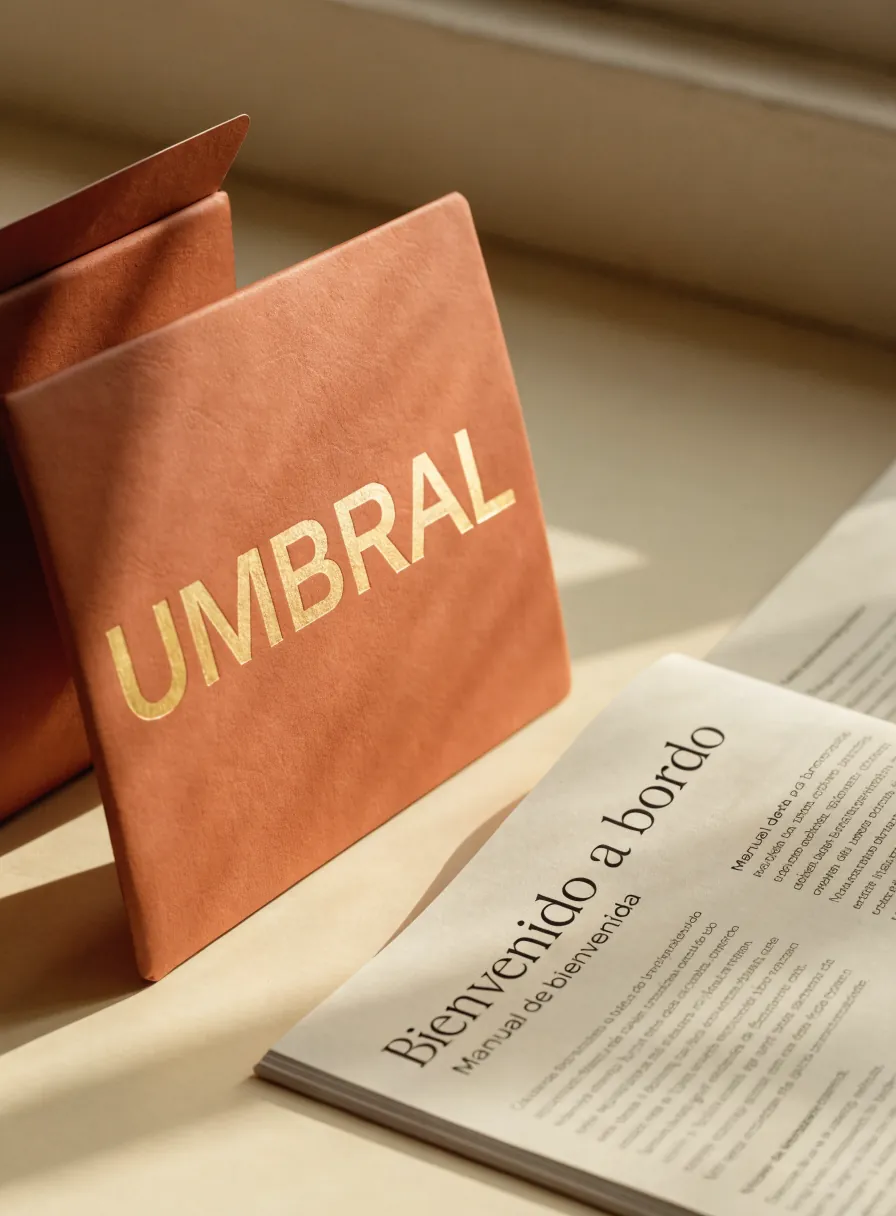
Foil anchors only where the die made full contact. Full grain leather and open weave cloth rise and fall, so the die touches the crests and leaves the ground showing between the dots. The gold reads speckled when the stroke measures the same as one pore or one thread crossing. On a continuous surface the same strike closes like a mirror.
The metal stays where the die touched
Foil reaches the workshop in rolls, a polyester film carrying two coatings on top. One coating holds the metallic pigment and the other holds an adhesive that wakes with heat. The magnesium or brass die heats up and comes down with the film in between, and the adhesive releases the metal wherever contact was full and pressure was enough. The whole technique fits inside that one sentence.
From there comes the rule that orders everything else. A continuous surface delivers full contact and the stroke closes solid. A surface with a relief of its own delivers contact at the crests alone, and the gold arrives as a constellation of dots with the ground showing between them. The trade has a word for that, and the Atelier's piece bank repeats it across 20 records that name the failure as speckling in their field for where it breaks. Speckled gold on black cotton paper, because the open fiber swallows the resin. Speckled gold on cloth, with the weave visible under the metal.
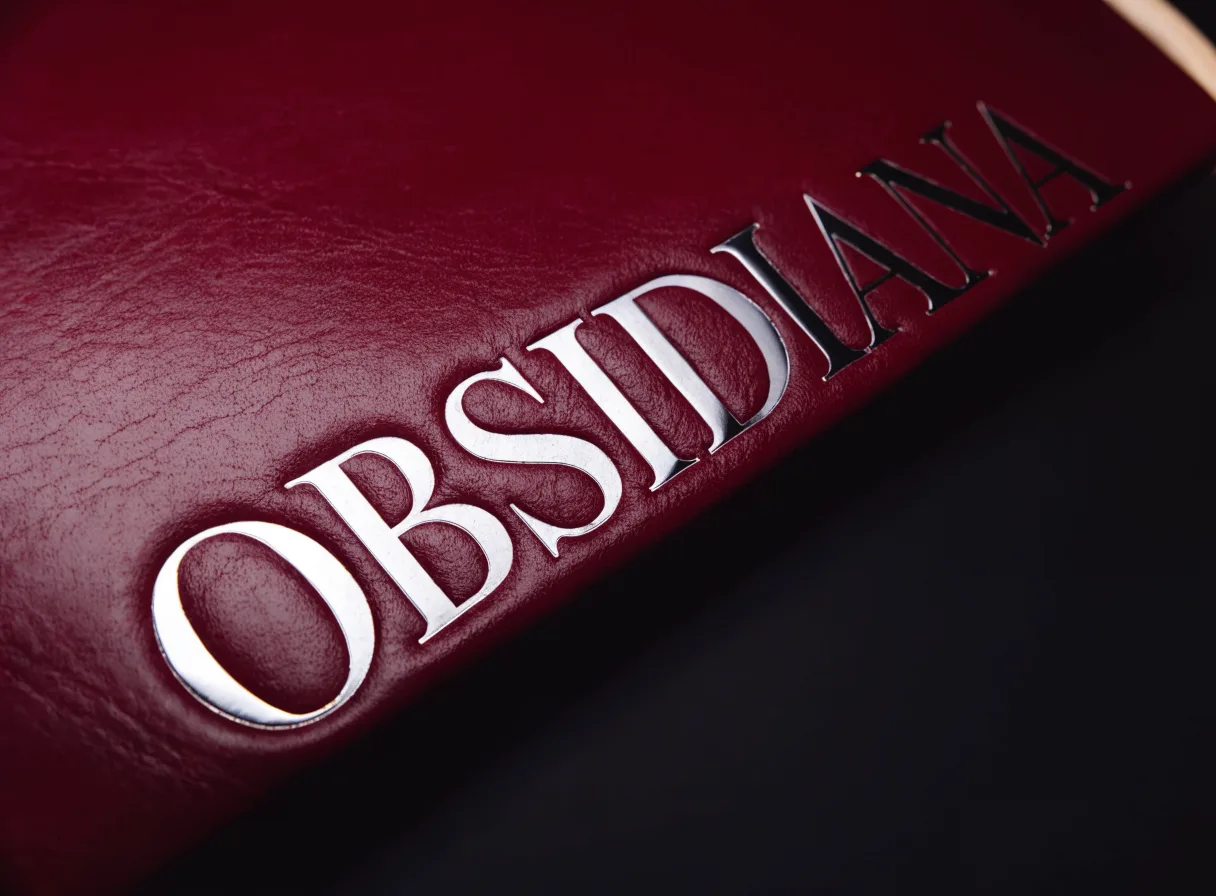
Your fingernail reads the leather
Full grain leather keeps the pore exactly as it grew, and that pore has depth. The trade wraps covers and portfolios in full grain at 1.2 to 1.6 millimeters, and at that thickness the grain behaves like a landscape of crests and valleys that the hot press never levels. Corrected grain leather arrives sanded and coated, with a nearly continuous surface, and there the same strike with the same die closes the whole stroke and gives back a mirror. The stamped word is the same in both cases. The pore decides the result.
The instinctive answer to speckled gold is more pressure. Contact goes up, and the debossing goes up with it. The letter sinks in and a halo appears around the text. With too much heat the grain scorches and leaves a matte ring that stays for good.
Before the press comes the chemistry of the finish. Leather heavy with oil or a waxy finish carries a layer on top that holds the adhesive away from the surface, and the gold lifts at the first rub of a thumb. Run a dry white cotton swab over a hidden area. When it comes back with sheen or with color, the leather is migrating and the moment calls for a stamped sample.

The cloth rises and falls with the thread
On bookcloth or on dyed linen the landscape runs regular, and that regularity is what fools the eye. The thread crosses over and under, the die lands on the crossings, and the groove between them sits below the reach of the metal. A wide stroke rides several crossings in a row and closes complete. A thin stroke falls into a groove and breaks right there.
The defect in cloth carries a recognizable signature, and the inside of tight curves is where it becomes visible. When the cover carries a stamped year, the figures with closed counters give the work away, because the stroke curves and thins right there. A logotype that reads flawless on a large cover loses its terminals once it scales down to the small notebook of the same set. Cloth adds the dyeing, which shifts from roll to roll and shows up because the set sits together on one table. Ordering a single roll settles that.

The stroke is decided before the press heats up
All of this is anticipated away from the machine.
The bank writes it down for paper. The record for the color proofing table declares as a critical capability holding a line under half a point clean of thickening, speckling or breaking, on textured paper. On open grain that threshold rises, and that is where the serif terminals and the thin perimeter rule live. A roman with fine stems on close grain leather holds with elegance, because every stem crosses many small pores at once. The same roman on open grain delivers letters with gaps.
The order of the strikes
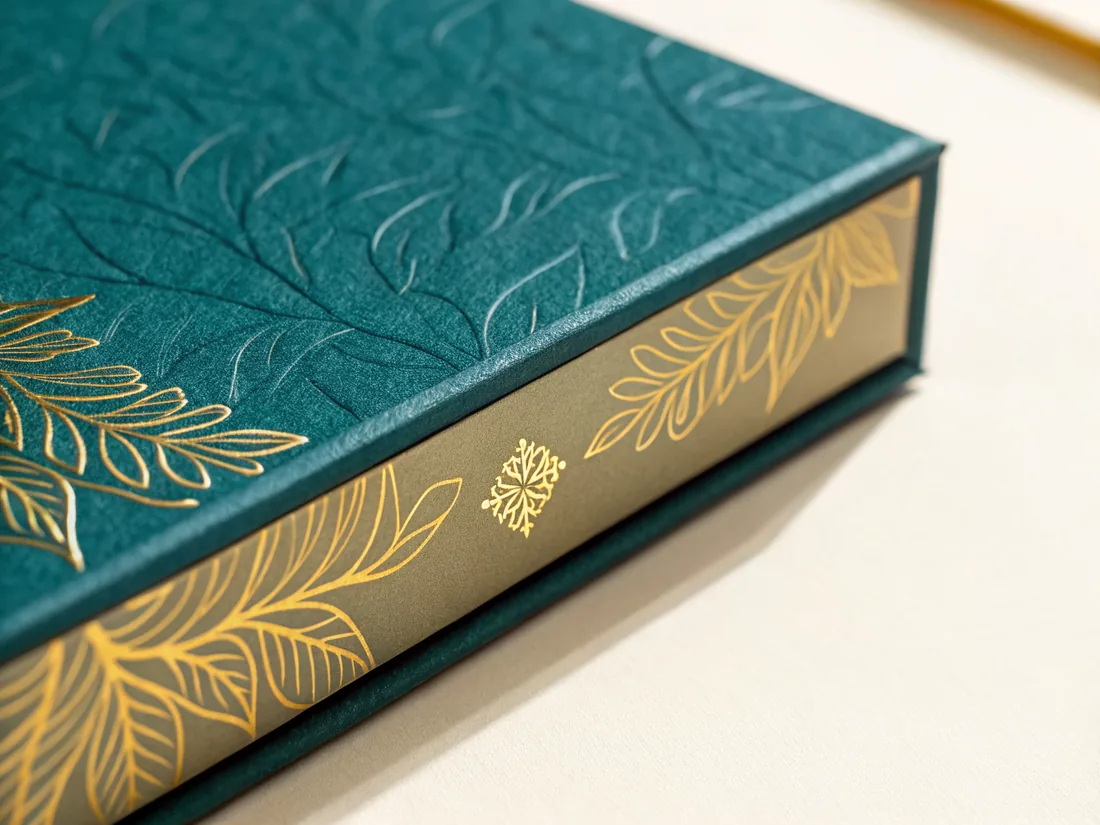
When the piece carries foil and blind embossing on the same face, the order rules. In the Atelier's piece bank, 57 records route the work through a foil and hot stamping workshop and through a debossing and blind embossing workshop. In 37 of them the embossing goes in ahead of the foil, and in the remaining 20 the foil goes first. The piece sets the order, according to which strike needs the sheet still flat.
What repeats across the 57 is the demand for register. The record for the felt folder with a copper foil name and a debossed monogram puts it in the workshop's own words. Two separate strikes have to land aligned to the millimeter, and that calls for a precision press. When the register drifts, the shoulder of the debossed stroke eats the edge of the metal already stamped, and that defect arrives final.
47 records name register alongside foil inside their critical capability. One of them, a professional degree with a debossed crest and a gold seal, writes down the exact way it breaks. The variable name lands off the axis of the preprinted text and sits half a millimeter over, which on a diploma reads from across the room. On handmade paper with a deckle edge the register dances by nature, and guides plus a sheet by sheet review settle it.
The workshop that stamps decides whether the piece comes out.
What to ask for before you approve
The useful conversation opens by asking for a stamped sample on the production material, from the same lot and with the final die. It continues by asking that the sample be rubbed with a thumb in front of you, because a foil headed for lifting lifts right then. And it closes by declaring in writing the width of the thinnest stroke, so whoever engraves the die works with a number. Leather shifts in tone between hides and within one hide, so the covers get chosen together and the sample gets approved against the worst case.
A while with the material in your hand, a fingernail across the grain and the light set to the side saves the whole run.
Questions that come up often
Why did my gold logo on the leather cover come out speckled?
Because full grain leather keeps the pore exactly as it grew, and that pore has depth. The hot die lands on the crests and the metal stays there, with the ground showing between the dots. Corrected grain leather arrives sanded and coated, and on that nearly continuous surface the same strike with the same die gives back a mirror.
Does raising the press pressure fix speckled gold?
Raising the pressure raises the contact and raises the debossing with it. The letter sinks in and a halo appears around the text. With too much heat the grain of the leather scorches and leaves a matte ring that stays for good. The decision that solves speckling lives in the surface of the material and in the width of the stroke, before the press heats up.
How do I know before stamping whether the gold will lift off the leather?
Run a dry white cotton swab over a hidden area of the leather. When the cotton comes back with sheen or with color, the leather is migrating, because a finish heavy with oil or wax leaves a layer on top that holds the foil adhesive away from the surface, and the metal lifts at the first rub of a thumb. That is the moment to ask for a stamped sample.
Why do thick gold lines run whole on cloth and thin ones break?
On cloth the thread crosses over and under, the die lands on the crossings and the groove between them sits below the reach of the metal. A wide stroke rides several crossings in a row and closes complete. A thin stroke falls into a groove and breaks right there, and the inside of tight curves is where it shows most.
What do I ask the workshop for before I sign off on a foil job?
A stamped sample on the production material, from the same lot and with the final die. That sample rubbed with a thumb in front of you, because a foil headed for lifting lifts right then. And the width of the thinnest stroke declared in writing, so whoever engraves the die works with a number.
Follow the thread
Three doors to carry the journey forward.
Have you imagined yours?
Tell us what you imagine and who it is for. We listen first, and from there we create it with you until you hold it in your hands.