Eleven steps and ten workshops for a single kit
The table reads as one family, and the route behind it crosses ten trades. Color sits in a different place inside each one, and that is where a set drifts out of step.

A merchandising kit that the eye reads as a single family travels eleven steps and passes through ten different workshops. Every trade keeps color in a place of its own. In screen printing it lives in the ink well, in embroidery it is a spool of thread dyed at the mill, in ceramics it is a kiln reaction. The master tone belongs to the process with the least room to move, and the ink chases that tone.
The table in the photograph reads all at once. A printed canvas tote, a steel tumbler, two caps, a folded t-shirt, a printed scarf, a two tone ceramic mug, a spiral notebook and a metal pen. Nine pieces the eye registers as a single family, in a single color. The production route for that table runs eleven steps and names ten different workshops, counting each workshop once even when it appears in two steps.
The Atelier's piece bank holds 1,291 records with the route written step by step. Of those, 1,202 call for two suppliers or more, with a median of three, and 1,256 touch two workshop types or more, with a median of four, and fifty-one reach six or more. That vocabulary uses 48 values, and 47 of them are workshops. A piece that looks simple has almost always traveled.
Color lives in a different place in every material
Color that drifts out of step has a physical reason, and it becomes clear once you see where color lives inside each process. In screen printing and in offset it lives in the ink well, which is adjusted until it reaches the target, with wide room to move.
In embroidery, color is a spool. The thread arrives dyed at the mill on a closed shade card, and the decision comes down to choosing the nearest match from a finite catalog.
In ceramics, color is a reaction. Glaze goes into the kiln one color and comes out another, and the final tone depends on the firing curve. A mug with artwork carries a ceramic decal and a third low firing to set it. Seven routes in the bank write that step in those words.
Laser engraving takes its color from the material itself, so the mark reads in the color of the metal underneath. The tumbler on the table is engraved on a rotary fixture and delivers silver on silver.
In foil, color is a metallic film transferred with heat and pressure from a brass die. Every foil gold lives inside a short range, and printed gold ink lives inside another. One single gold spread across foil, pad printing and embroidery thread delivers three golds.
That is what makes this table specific. Of the 1,291 routes in the bank, eight bring together four different color industries or more. The one in the photograph brings together six, the highest count in the bank. They are flat screen printing, sublimation, industrial embroidery, pad printing, high temperature ceramics and digital printing.
Four terracottas in a single photograph
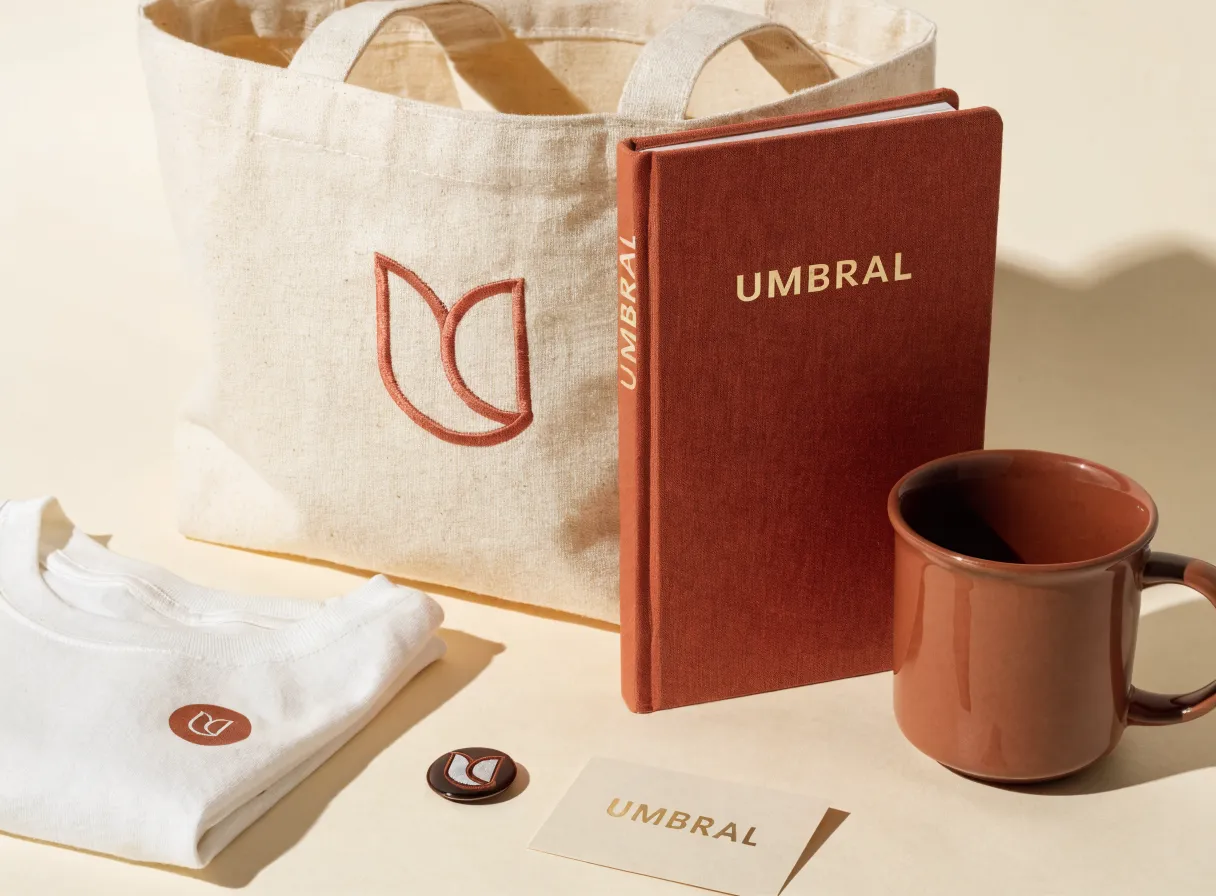
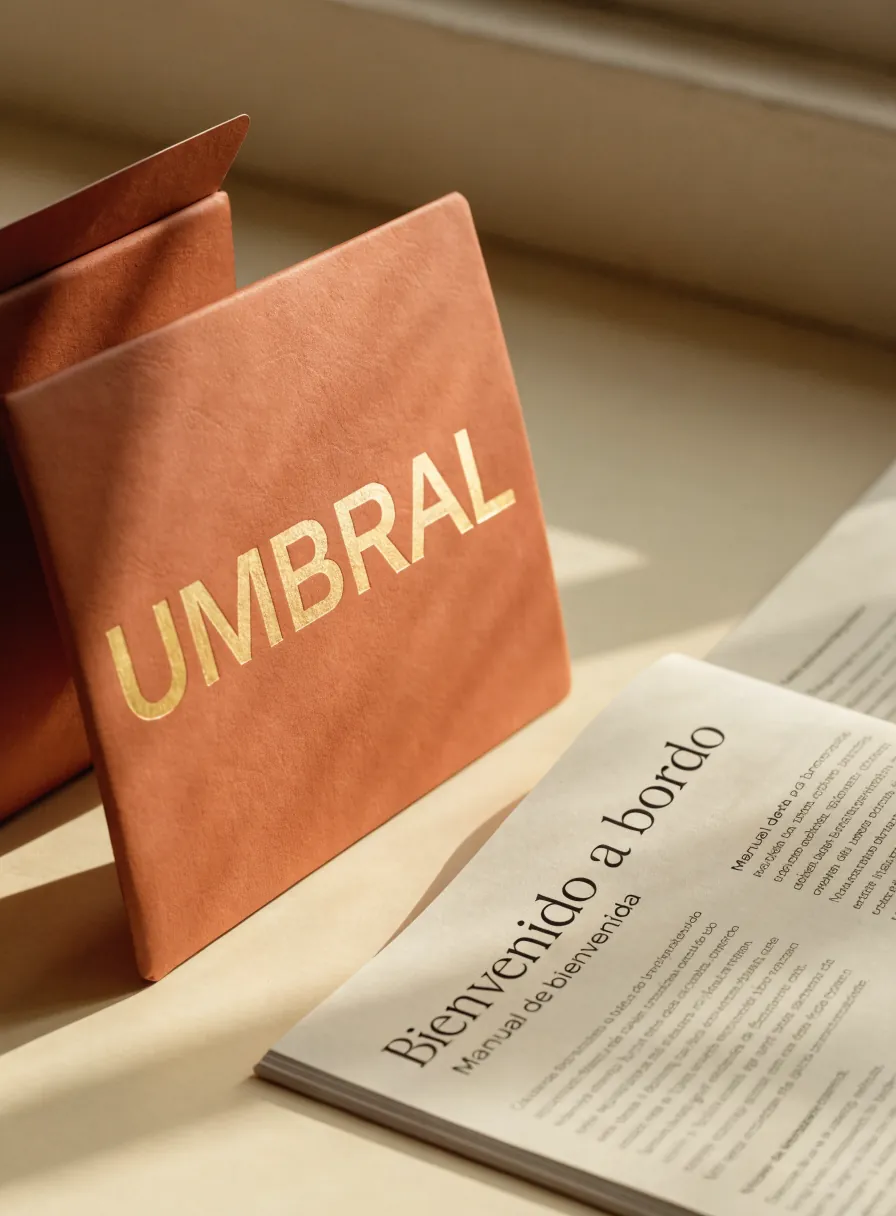
The welcome kit in the second photograph runs eight steps. The emblem on the tote is embroidered in satin stitch, and that terracotta is a spool. The book is wrapped in bookbinding cloth, and that terracotta is dyed by the roll. The mug comes out glazed and fired, and that terracotta came out of the kiln. The pin is enameled metal, and that terracotta is fired inside the cell of the die. Four terracottas from four different processes, side by side, in the same delivery photograph.
That is what a person notices on opening the box, and the sentence that comes back is that the kit looks second rate. The bank holds 71 records whose piece is a kit, and 23 of them name tone or color in the field that describes where things break.
The rule that orders tone
The master tone belongs to the process with the least room to move.
Thread comes from a closed shade card, glaze answers to a kiln curve, foil comes off a roll inside a short range and bookbinding cloth is dyed by lot. Ink is mixed as far as it needs to go. So the physical sample of the thread, the glaze or the cloth is approved first, and the ink chases that tone.
The sequence that breaks a set shows up often. A printed sheet is approved, that pantone goes to the embroidery shop and to the ceramics shop, and both are left with no room to move. Embroidery delivers the nearest spool, the kiln delivers what the kiln delivers, and the printed sheet stands as the only piece that landed on target.
A pantone on screen starts the conversation. The agreement is signed on the real material, under the light where the set is going to be opened.
Registration is the second loss
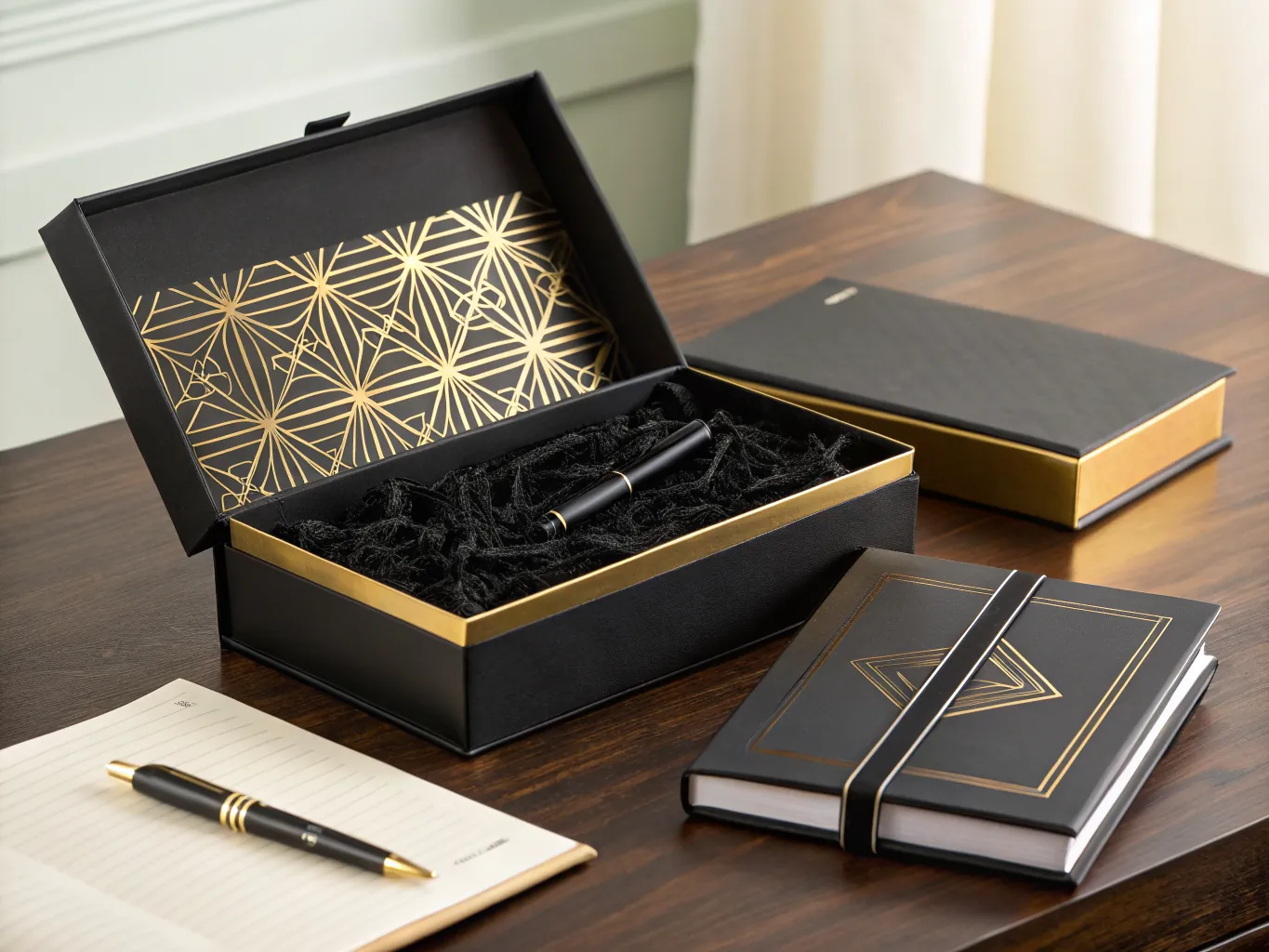
Registration is where a mark lands in relation to something already in place, and every workshop brings its own limit. The route for the executive kit in the third photograph sets this out clearly. Eight steps spread across seven workshops, with the foil on the inside of the lid entering at step three, while the assembly and the wrapping of the box arrive at step five. Foil goes down on flat paper, where registration comes out cleaner and the sheet can be replaced. Stamping it on the finished box means hitting the mark in one strike.
The all over print piece comes from sublimated fabric and the cutting arrives afterward, so the pattern has to match at the shoulder seam. That route carries a color consequence that surprises people. Sublimation sets into polyester, and the plain t-shirt in the same kit is cotton with screen printing. The two whites come out different, and on the table they sit side by side.
Foil changes recipe with the material. On porous paper it calls for more heat and less pressure, and on leather the strike scorches the grain and leaves a matte halo around the letter. Of the 1,291 records in the bank, 310 routes pass through a foil and hot stamping workshop, and that concentration explains why foil is planned from the start.
Screen printing mesh is chosen the same way, by the stroke. A thin serif calls for fine mesh, on the order of 110 to 140 threads, because open mesh thickens the letter and closes the counters. That range is workshop judgment and we write it as such.
Step eleven
The last step of the route in the photograph is called cross tone control. The lines arrive at the same place, they are opened together and compared against the physical master and against each other. It is the one moment when the nine pieces exist at the same time, and for that reason the one moment when the drift becomes visible.
That closing shows in the bank as well. There are 76 routes that open and close with the same packing and kitting workshop, and 34 that name tone inside their last step.
That is where tone is checked against the master, the pattern match at the seams of the sublimated garment, the registration of the foil against the edge and the rim of the mug for chipping.
What leaves that step travels as one single thing.
Three questions before you begin
When a set crosses trades, three questions order everything else from the start. Which piece rules the tone. Which material the sample is signed on. And who opens the boxes at the same time. The third one rarely has an owner, and it is the one that decides whether the set arrives as one.
Questions that come up often
Why does the color look different on every piece when I sent the same Pantone everywhere?
Because color lives in a different place inside each process. In screen printing it is adjusted in the ink well with wide room to move. In embroidery the thread arrives dyed at the mill on a closed shade card, and the decision comes down to choosing the nearest match. In ceramics the glaze goes into the kiln one color and comes out another. One single gold spread across foil, pad printing and embroidery thread delivers three golds.
Which piece rules the color when the set carries embroidery, ceramics, foil and printed paper?
The master tone belongs to the process with the least room to move. Thread comes from a closed shade card, glaze answers to a kiln curve, foil comes from a short range and bookbinding cloth is dyed by lot. Ink is mixed as far as it needs to go. For that reason the physical sample of the thread, the glaze or the cloth is approved first, and the ink chases that tone.
Can I approve the color on screen or with a printed sheet?
A Pantone on screen starts the conversation, and the agreement is signed on the real material, under the light where the set is going to be opened. The sequence that breaks a set approves a printed sheet first and sends that Pantone to the embroidery shop and to the ceramics shop. Both are left with no room to move, and the printed sheet stands as the only piece that landed on target.
At what point in production does the foil on a box go down?
Foil goes down on flat paper, ahead of assembly. In the route for the executive kit the foil on the inside of the lid enters at step three, and the assembly and the wrapping of the box arrive at step five. On flat paper registration comes out cleaner and the sheet can be replaced. Stamping it on the finished box means hitting the mark in one strike.
When are all the pieces of the set checked against each other?
In the last step of the route, called cross tone control. The lines arrive at the same place, they are opened together and compared against the physical master and against each other. It is the one moment when all the pieces of the set exist at the same time, and for that reason the one moment when the drift becomes visible. That is where the registration of the foil is checked against the edge.
Follow the thread
Three doors to continue the journey.
Have you imagined yours yet?
Tell us what you imagine and who it is for. We listen first, and from there we create it with you until you hold it in your hands.